Mostrando entradas con la etiqueta remezcla. Mostrar todas las entradas

9/1/10

Histoire(s) du cinéma, 1988-1998; Jean Luc Godard

___________________

HISTOIRE(S) DU CINEMA Chapter1A - Toutes les Histoires, 1988

Histoire(s) du cinéma is a video project begun by Jean-Luc Godard in the late 1980s and completed in 1998. It is always referred to by its French title, because of the wordplay it implies: histoire means both "history" and "story," and the s in parentheses gives the possibility of a plural. Therefore, the phrase Histoire(s) du cinéma simultaneously means The History of Cinema, The Histories of Cinema, The Story of Cinema and The Stories of Cinema. Similar double and triple meaning, as well as puns, are a recurring motif throughout Histoire(s) and much of Godard's work.

The densest of Godard's films, Histoire(s) du cinéma is an examination of the history of the concept of cinema and how it relates to the 20th century; in this sense, it can also be considered a critique of the 20th century and how it perceives itself. The project is considered the major work of the late period of Godard's career; it is alternately described as an essay and a poem.

The film was screened out of competition at the 1988 Cannes Film Festival.[1] Nine year later, it was screened in the Un Certain Regard section at the 1997 Festival.[2]

Más en la wiki y aquí, la lista de reproducción completa del capítulo.

The record archive, in process; Dani Gal


The record archive, in process

Gal’s record archive is an ongoing project of collecting vinyl records that sound document historical events of the twentieth century.

The archive contains speeches and interviews by world leaders, wars in sound, peace agreements, human rights struggles and other radio broadcasts of the events that shaped history from the invention of the phonograph to the fall of the Berlin wall.

The phenomena of records that document political and historical events was popular from the 50’s until the late 80’s Most of the records had direct connection to propaganda and for the shaping of a national historical naratives.

The collection underlines how a society turns its historical events into commodities and how sound documentation functions in relation to collective memory.

Para ver más de Dani Gal.

7/1/10

"Sonic Outlaws" (1995); Craig Baldwin

_____________

_____________

Within days after the release of Negativland's clever parody of U2 and Casey Kasem, recording industry giant Island Records descended upon the band with a battery of lawyers intent on erasing the piece from the history of rock music.


Craig "Tribulation 99" Baldwin follows this and other intellectual property controversies across the contemporary arts scene. Playful and ironic, his cut-and-paste collage-essay surveys the prospects for an "electronic folk culture" in the midst of an increasingly commodified corporate media landscape.

"Gleefully Anarchic!" - Janet Maslin, New York Times

"Baldwin conceptualizes history as a lurid exploitation flick" - J. Hoberman, Village Voice

"Our sense of the shape of creativity and of originality must always be in question if we are to flourish. Sonic Outlaws does precisely that." - Chris Chang, Film Comment

Para verlo completo, ir a Ubu.

9/11/09

Get lost; Artist map downtown New York


GET LOST is a collective portrait of downtown New York. Twenty-one international artists were invited to create a personal view of the city and draw a map of downtown New York, uncovering a territory that is both real and imaginary. The maps were collected in a fanzine publication that was distributed for free at galleries, not-for-profit institutions and other sites that animate the life of downtown New York.

GET LOST brings together fictional landscapes, utopian visions, private memories, and obsessive instructions to explore Manhattan, its past, present, and future.

An exercise in emotional geography, GET LOST sketches the coordinates for an endless drift across the streets and myths of downtown New York.

GET LOST is the city as seen through the eyes of: 16beaver group; Francis Alÿs; Cory Arcangel; Jennifer Bornstein; Beth Campbell; Marcel Dzama; Isa Genzken; Inaba and Associates; Dorothy Iannone; Chris Johanson; Christopher Knowles; Terence Koh; Julie Mehretu; Jonas Mekas; Aleksandra Mir; Thurston Moore; Dave Muller; William Pope.L; Lordy Rodriguez; Rirkrit Tiravanija; Lawrence Weiner.

GET LOST is a New Museum production, edited by Massimiliano Gioni, Director of Special Exhibitions. To view copies, visit the New Museum Resource Center. To purchase, visit the New Museum Store.

Beginning Wednesday, June 6, 2007, free copies of GET LOST were made available to the public at the following markers of the downtown scene and cultural organizations around the city: Opening Ceremony (35 Howard Street), Babeland (43 Mercer Street), Bowery Poetry Club (308 Bowery), The Bowery Hotel (340 Bowery), Congee Village (100 Allen Street), Lost City Arts (18 Cooper Square), Freemans Restaurant (Freeman Alley at Rivington Street), Two Boots (155 East 3rd Street), Patricia Field (302 Bowery), Screaming Mimi's (382 Lafayette Street), Joe's Pub (425 Lafayette Street), Artist's Space (38 Greene Street, 3rd Floor), The Kitchen (512 West 19th Street), Sculpture Center (44-19 Purves Street, Long Island City), The Rotunda Gallery (33 Clinton Street, Brooklyn), Bronx Museum (1040 Grand Concourse at 165th Street, Bronx), and the Bedford Cheese Shop (229 Bedford Avenue, Brooklyn). GET LOST was also distributed at the galleries of participating artists.

Para verlo completo, en Get Lost.

13/8/09

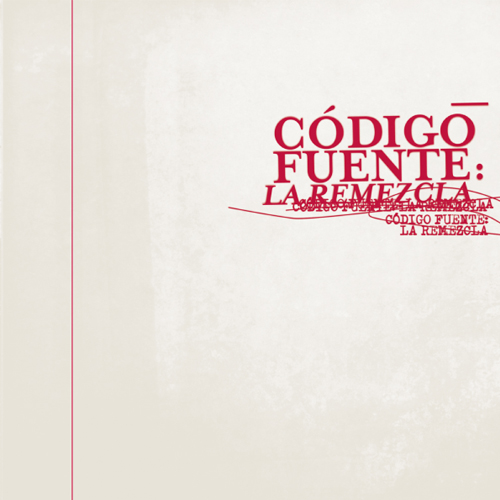
Código Fuente: la remezcla / Zemos98

¿Qué pueden tener en común un escritor surrealista con un DJ? ¿Qué relación hay entre un wiki y la literatura de vanguardia? ¿Puede ser un libro un software re-programable? ¿Puede contarse una historia y conceder al lector el código fuente para que este la remezcle?

Código Fuente: la remezcla es un anagrama, porque todos los elementos existen en una relación simultánea, por ello en su interior nada es primero y nada es posterior, nada es futuro o pasado, nada es viejo y nada es nuevo.

Código fuente: la remezcla es un juego. Un juego como experimentación, como inmersión entre las intersecciones entre ensayo y error, como variaciones de lo imprevisto, como tropos de lo posible, como ejercicio para recordar el futuro.

Código fuente: la remezcla como aleph insuficiente. Aleph porque intenta abarcarlo todo, insuficiente porque es un imposible asumido de antemano. La remezcla y su código fuente son un bucle que tiende a infinito, nuestro libro ralentiza por momentos el scratch, lo detiene como un elástico a punto de lanzar una piedra y lo suelta como una sinapsis digital.

(...)

Las cuestiones versan principalmente en torno a las ideas eje de los Encuentros: archivo y memoria, remezcla y palimpsesto. Cuestiones que colaboran a expandir el debate en torno a “lo nuevo” y “la cultura libre”, sobre ready-made y material encontrado, sobre apropiación y falsificación, sobre collage y montaje, sobre cita y remix, como conceptos clave en las artes audiovisuales más experimentales; sobre el montaje como palimpsesto de significados, el remontaje como operación creativa fundamental y como “instrumento susceptible de permitir la fagocitación de todo tipo de materiales” y como una búsqueda de producción de sentido como Harun Farocki apunta.

Pero también sobre cuestiones en torno a la sociedad network, en torno al uso cultural de los nuevos medios en la que algunos consideran la época post-media.


Descarga Código fuente: la remezcla en PDF.


Más en grand masters Zemos98.