Mostrando entradas con la etiqueta found footage. Mostrar todas las entradas

25/9/11

Found Footage [Films and videos]


LAS VARIACIONES MARKER | Isaki Lacuesta [2008]


Es un proyecto de CREAS A.C. dedicado a la difusión y visonado de obras found footage, cine apropiado, reciclado, rayado, scratcheado y remezclado.
Selección realizada por Enrique Piñuel (Playtime Audiovisuales)

 Cine reciclado es un repositorio indispensable. Aquí arriba dejamos esta fantástica película - de Chris Marker?, ese grande de la composición a través del fragmento- por Isaki Lacuesta que tuve la oportunidad de ver en el Zemos98 del 2008. Gracias a Playtime por la selección

26/1/10

Jeff Keen


Flik Flak (extract); Jeff Keen, 1963.


Instant Cinema; Jeff Keen, 1962/2007


GAZWRX; Jeff Keen, 1967

Gazwrx: The films of Jeff Keen

The BFI have just done us proud with a box set of Jeff Keen films entitled Gazwrx, not to mention various screenings of his works – and all from brand spanking new prints! Keen was one of the earliest and best British underground film-makers. He was largely self-taught and is blessed with a beatnik sensibility that converges with the hippie scene of the later sixties but remains a distinctive strand within it. As a starting point for all this, imagine a surrealist remake of Robert Frank’s Pull My Daisy (1959) set in Brighton and you’re not a million miles away from Like The Time Is Now (1961); except, of course, the comparison glosses over Jeff Keen’s singularity. Wail (1960) is probably more typical of Keen’s cinematic sensibility; a crazy mix of animation and live action footage featuring Hollywood werewolves, high art and gang violence. Using 8mm film, Keen created scratch video 20 years before anyone else had thought of it. The resultant mix and match of high art and lowbrow popular culture runs through forty years of his film work.

From the early sixties right through to the late seventies Keen worked with an ensemble of players who might be compared to the troupe John Waters deployed in his midnight movie hits before making the transition to Hollywood director. Although both men clearly set out to entertain their audiences, the similarities pretty much stop there because Keen created shorts not features, had no time for narrative and made extensive use of animation and double exposure. So the results are closer to Ira Cohen’s Invasion of Thunderbolt Pagoda (1968) than Pink Flamingos (1972). But as in John Waters’ far more conventional flicks, Keen’s ensemble of actors liked to dress up and act out as exaggerated comic book versions of themselves: and some of them were rather fond of taking their clothes off too, particularly Jeff’s wife Jackie Keen. One can sense from the films that there were sexual shenanigans going on off-screen that fuelled the bad craziness caught on celluloid. But if sex and nudity don’t do it for you, there are also cardboard ray guns, monsters, endless explosions of paint and other pyrotechnics. The titles of the films in the Gaswrx box provide a good indication of their content: Cineblatz, Marvo Movie, Meatdaze, The Cartoon Theatre of Dr Gaz, Return of Silver Head, Victory Thru Film Power, Kino Pulveriso, The Dreams and Past Crimes of the Archduke, Omozap, Artwar Fallout, Plasticator etc.

(...)


Continúa leyendo en StewartHomeSociety.

7/1/10

"Sonic Outlaws" (1995); Craig Baldwin

_____________

_____________

Within days after the release of Negativland's clever parody of U2 and Casey Kasem, recording industry giant Island Records descended upon the band with a battery of lawyers intent on erasing the piece from the history of rock music.


Craig "Tribulation 99" Baldwin follows this and other intellectual property controversies across the contemporary arts scene. Playful and ironic, his cut-and-paste collage-essay surveys the prospects for an "electronic folk culture" in the midst of an increasingly commodified corporate media landscape.

"Gleefully Anarchic!" - Janet Maslin, New York Times

"Baldwin conceptualizes history as a lurid exploitation flick" - J. Hoberman, Village Voice

"Our sense of the shape of creativity and of originality must always be in question if we are to flourish. Sonic Outlaws does precisely that." - Chris Chang, Film Comment

Para verlo completo, ir a Ubu.

13/8/09

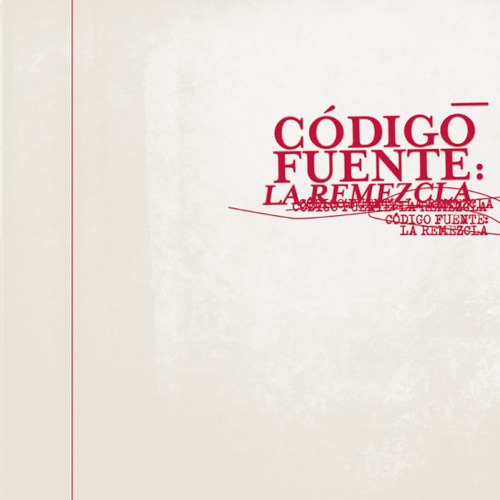
Código Fuente: la remezcla / Zemos98

¿Qué pueden tener en común un escritor surrealista con un DJ? ¿Qué relación hay entre un wiki y la literatura de vanguardia? ¿Puede ser un libro un software re-programable? ¿Puede contarse una historia y conceder al lector el código fuente para que este la remezcle?

Código Fuente: la remezcla es un anagrama, porque todos los elementos existen en una relación simultánea, por ello en su interior nada es primero y nada es posterior, nada es futuro o pasado, nada es viejo y nada es nuevo.

Código fuente: la remezcla es un juego. Un juego como experimentación, como inmersión entre las intersecciones entre ensayo y error, como variaciones de lo imprevisto, como tropos de lo posible, como ejercicio para recordar el futuro.

Código fuente: la remezcla como aleph insuficiente. Aleph porque intenta abarcarlo todo, insuficiente porque es un imposible asumido de antemano. La remezcla y su código fuente son un bucle que tiende a infinito, nuestro libro ralentiza por momentos el scratch, lo detiene como un elástico a punto de lanzar una piedra y lo suelta como una sinapsis digital.

(...)

Las cuestiones versan principalmente en torno a las ideas eje de los Encuentros: archivo y memoria, remezcla y palimpsesto. Cuestiones que colaboran a expandir el debate en torno a “lo nuevo” y “la cultura libre”, sobre ready-made y material encontrado, sobre apropiación y falsificación, sobre collage y montaje, sobre cita y remix, como conceptos clave en las artes audiovisuales más experimentales; sobre el montaje como palimpsesto de significados, el remontaje como operación creativa fundamental y como “instrumento susceptible de permitir la fagocitación de todo tipo de materiales” y como una búsqueda de producción de sentido como Harun Farocki apunta.

Pero también sobre cuestiones en torno a la sociedad network, en torno al uso cultural de los nuevos medios en la que algunos consideran la época post-media.


Descarga Código fuente: la remezcla en PDF.


Más en grand masters Zemos98.

11/8/09

Found footage


Para ver la filmografía de Isaki Lacuesta.

Bola extra sobre el tema:
The Atomic café (1982)


Directed by
Jayne Loader
Kevin Rafferty
Pierce Rafferty


Más info sober la peli en IMDB

Las múltiples imágenes que se construyen en la actualidad podrían adquirir mayor valor en el futuro al ser recuperadas por otros, estos nuevos sujetos podrían desear construir una historia propia a partir de fragmentos del pasado, o revisar una cultura y un modo de producción de imágenes del cual se toma conciencia con el paso del tiempo. Los registros antiguos suelen provocar cierta nostalgia histórica sociológica, esta sensación es la que se produce al observar el cine creado a partir de archivos encontrados (found footage films). Este “movimiento” toma la idea de pensar el cine como arte del presente pues recupera material antiguo, lo actualiza potenciando principalmente su forma y haciéndolo conservar su valor de archivo- lo que no implica que las imágenes preserven su sentido original-. Los archivos encontrados vienen de distintas fuentes: películas históricas, pornográficas, familiares, imágenes televisivas, etc… independiente de su clasificación inicial, desde el descubrimiento de ellas por el realizador todas corresponden a materiales potencialmente utilizables. Los lugares en los cuales son rescatados también varían, algunos son archivos de filmotecas, de familias, bibliotecas, mercados e incluso películas encontradas en la basura.

(...)

Continuar leyendo
.