
Presentación de Jeleton: Reading-She, dentro de las jornadas
"Producciones de arte feminista: procesos de conocimiento e
interrelaciones generacionales" que tuvieron lugar en Arteleku del 22 al
24 de julio de 2013.
Mostrando entradas con la etiqueta biblioteca. Mostrar todas las entradas
Mostrando entradas con la etiqueta biblioteca. Mostrar todas las entradas


7/4/12

19/5/10
Psiquifotos


Camino Galicia, J. Manual práctico de exploración y examen de las facultades mentales. Imprenta A. Marzo. Madrid, 1924.


López Ibor, J.J. El libro de la vida sexual. Ed. Danae. Barcelona, 1968.
 “Arc de cercle” en un hombre. Charcot - Richer, 1885
Es una pena que en el gran blog psiquifotos, las imágenes no sean de más calidad..aún así, recomendamos la visita para ver la gran cantidad de material posteado sobre las relaciones entre fotografía, arte y psiquitaría, introduciendo, entre otras cosas, mucho material bibligráfico de fuentes del territorio español.
24/1/10
The library of the Congress
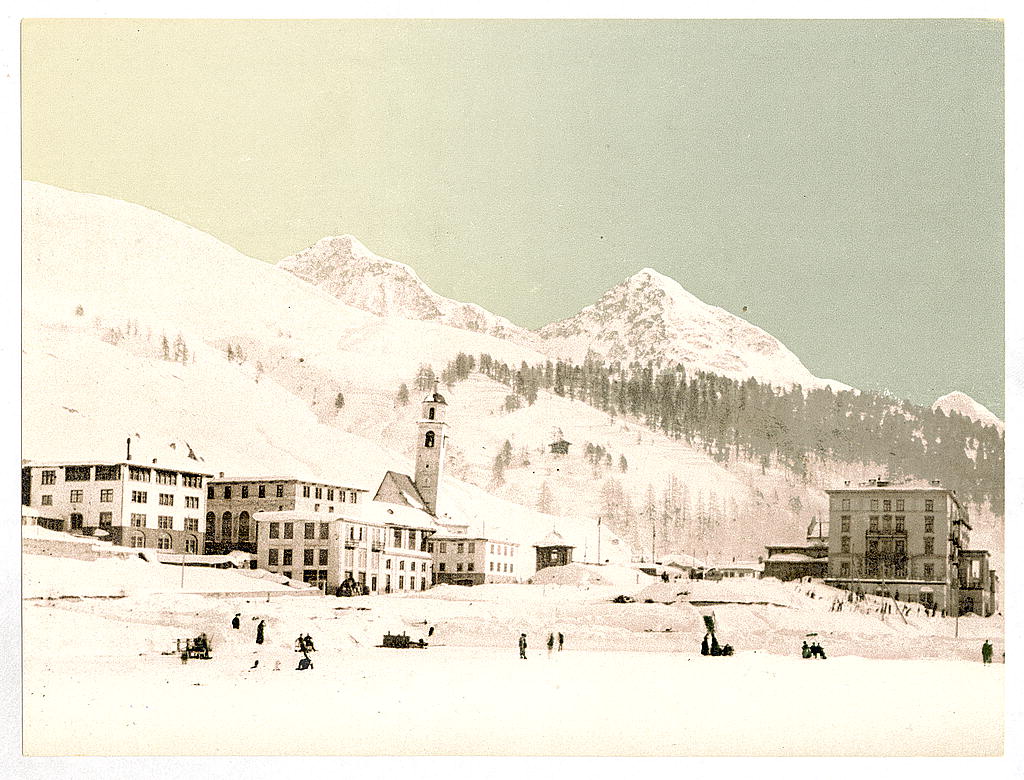
[St. Moritz, Grisons, Switzerland, in winter (reversed)]
[before 1890].
1 photomechanical print : photochrom, color.
Notes:
Photo shows the leaning tower of St. Maurice church before 1890 when the nave was torn down. (Source: Flickr Commons project, 2009)
"1011" stamped on the back of the print.
Title from identifying information provided by the Flickr Commons project, 2009. (Print not listed in the Detroit Publishing Company, Catalogue J, 1905.)
Forms part of: Nineteenth century travel views of Europe in the Photochrom print collection.
Format: Photochrom prints--Color--1890-1900.
Rights Info: No known restrictions on publication.
Repository: Library of Congress, Prints and Photographs Division, Washington, D.C. 20540 USA, hdl.loc.gov/loc.pnp/pp.print
Part Of: Nineteenth century travel views of Europe (DLC) 2002707970
More information about the Photochrom Print Collection is available at hdl.loc.gov/loc.pnp/pp.pgz
Persistent URL: hdl.loc.gov/loc.pnp/ppmsc.09997
Call Number: LOT 13512, no. 25 [item]
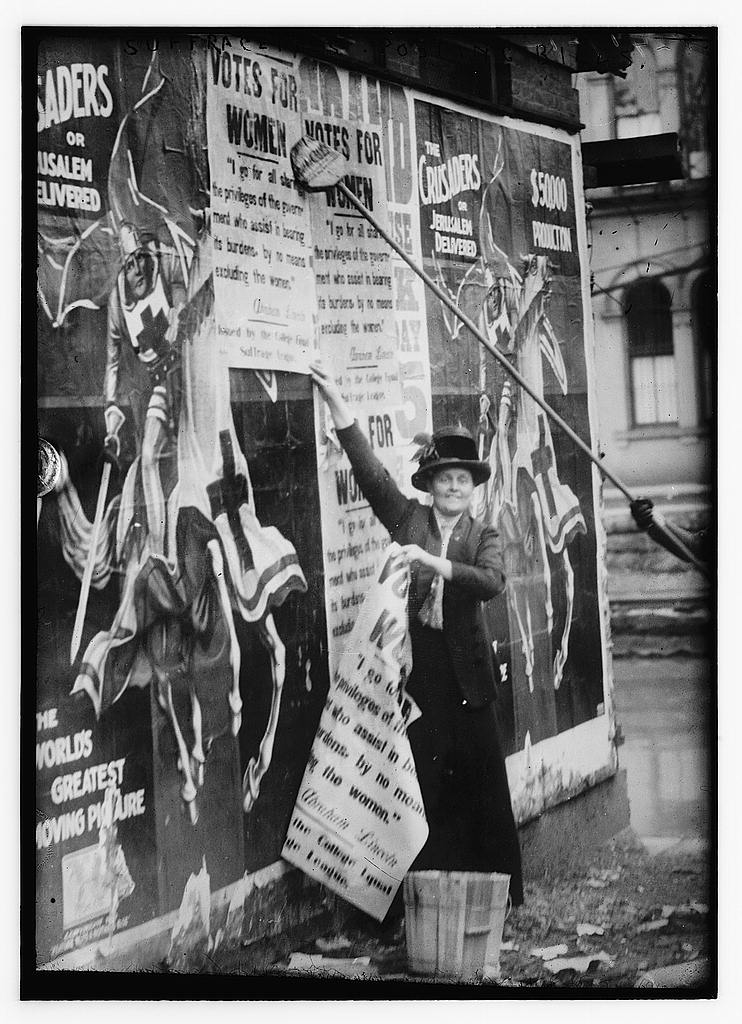
Bain News Service,, publisher.
Suffragettes posting bills
[between 1910 and 1915]
1 negative : glass ; 5 x 7 in. or smaller.
Notes:
Title from unverified data provided by the Bain News Service on the negatives or caption cards.
Forms part of: George Grantham Bain Collection (Library of Congress).
Format: Glass negatives.
Rights Info: No known restrictions on publication.
Repository: Library of Congress, Prints and Photographs Division, Washington, D.C. 20540 USA, hdl.loc.gov/loc.pnp/pp.print
General information about the Bain Collection is available at hdl.loc.gov/loc.pnp/pp.ggbain
Persistent URL: hdl.loc.gov/loc.pnp/ggbain.10578
Call Number: LC-B2- 2417-13
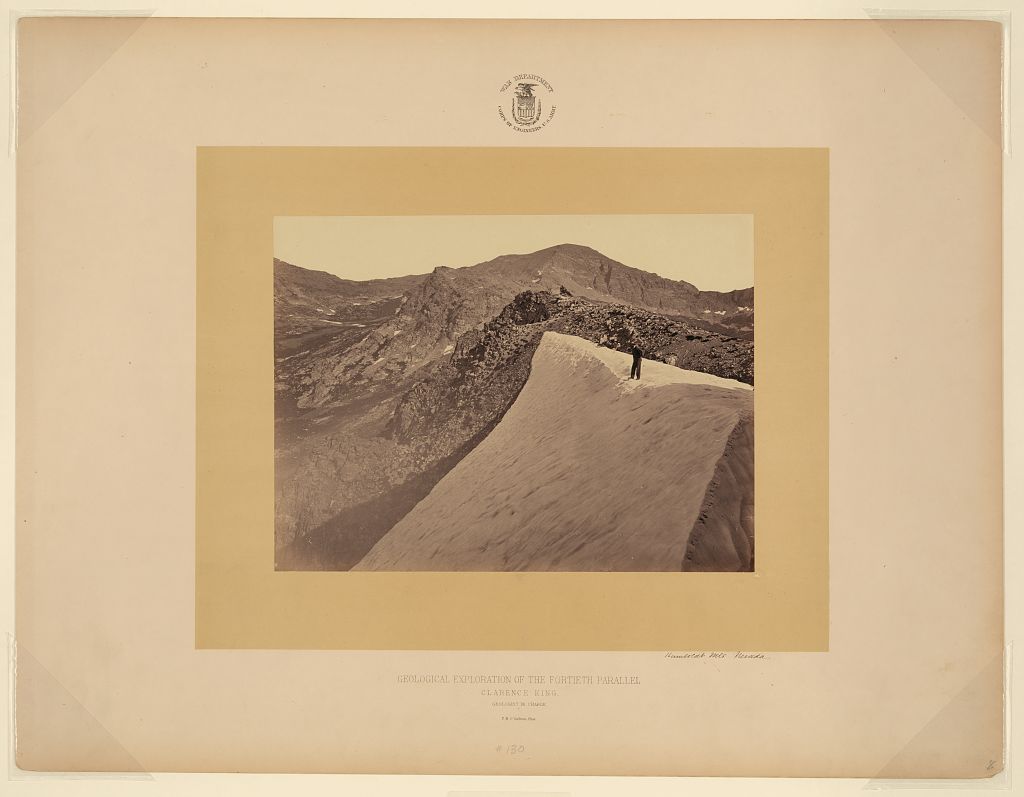
O'Sullivan, Timothy H., 1840-1882, photographer.
Humboldt Mts., Nevada
[1868]
1 photographic print : albumen.
Notes:
Title from item. Date from curatorial research in 2009.
Plate 130 from: Geological Exploration of the Fortieth Parallel / United States Army Corps of Engineers; Clarence King, geologist in charge. [Washington, D.C.; 187-?].
Photograph showing a man standing on snow on the mountain.
Published in: Framing the West: The Survey Photographs of Timothy H. O'Sullivan / Toby Jurovics, Carol M. Johnson, Glenn Willumson, and William F. Stapp. New Haven: Yale University Press, 2010, plate 22.
Subjects:
United States Geological Exploration of the Fortieth Parallel--(1867-1881)
Mountains--Nevada--1860-1870.
Format: Expedition photographs--1860-1870.
Landscape photographs--1860-1870.
Albumen prints--1860-1870.
Rights Info: No known restrictions on publication.
Repository: Library of Congress, Prints and Photographs Division, Washington, D.C. 20540 USA, hdl.loc.gov/loc.pnp/pp.print
Persistent URL: hdl.loc.gov/loc.pnp/ppmsca.11916
Call Number: LOT 7096, no. 130
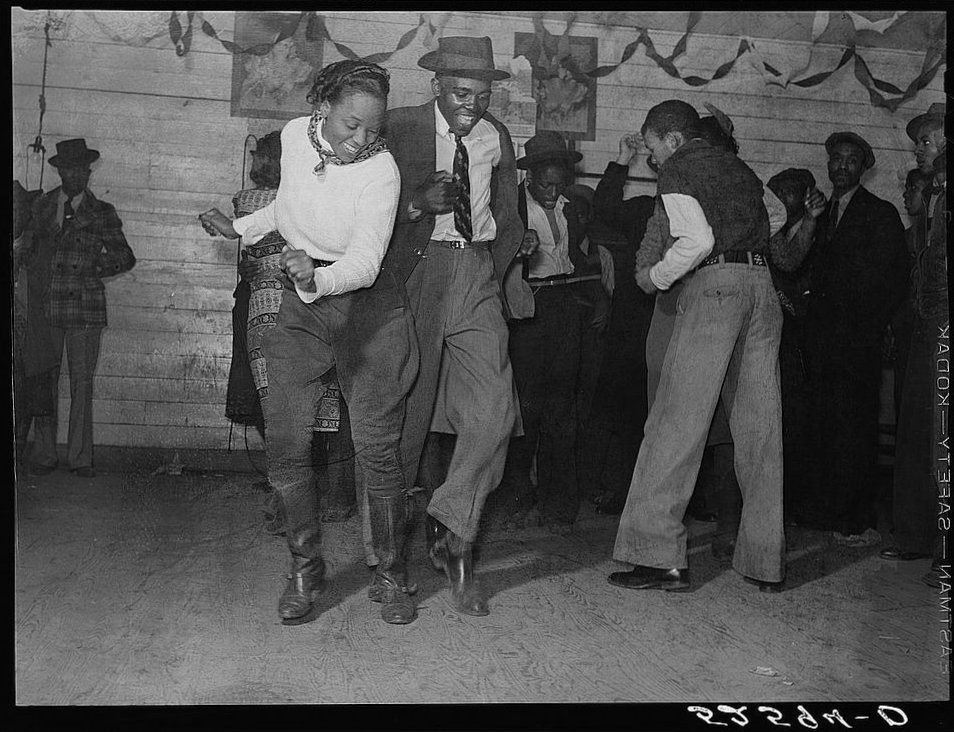 Wolcott, Marion Post, 1910-1990, photographer.
Jitterbugging in Negro juke joint, Saturday evening, outside Clarksdale, Mississippi
1939 Nov.
1 negative : safety ; 3 1/4 x 3 1/4 inches or smaller.
Notes:
Title and other information from caption card.
Transfer; United States. Office of War Information. Overseas Picture Division. Washington Division; 1944.
Subjects:
Clarksdale--Mississippi
United States--Mississippi--Coahoma County--Clarksdale.
Format: Safety film negatives.
Rights Info: No known restrictions on publication.
Repository: Library of Congress, Prints & Photographs Division, Washington, DC 20540, hdl.loc.gov/loc.pnp/pp.print
Part Of: Farm Security Administration - Office of War Information Photograph Collection (Library of Congress)
More information about the FSA/OWI Collection is available at hdl.loc.gov/loc.pnp/pp.fsaowi
Persistent URL: hdl.loc.gov/loc.pnp/fsa.8c36090
Call Number: LC-USF34- 052594-D

New-York tribune. (New York [N.Y.]) 1866-1924
July 11, 1909, Image 15
Notes: Cover, illustrated supplement.
Format: Newspaper page, from microfilm
Rights Info: No known restrictions on reproduction.
Repository: Library of Congress, Serial and Government Publications Division, Washington, D.C. 20540 USA.
Part Of: Chronicling America (Library of Congress) (DLC) - lccn.loc.gov/2007618519
Persistent URL: chroniclingamerica.loc.gov/lccn/sn83030214/1909-07-11/ed-...
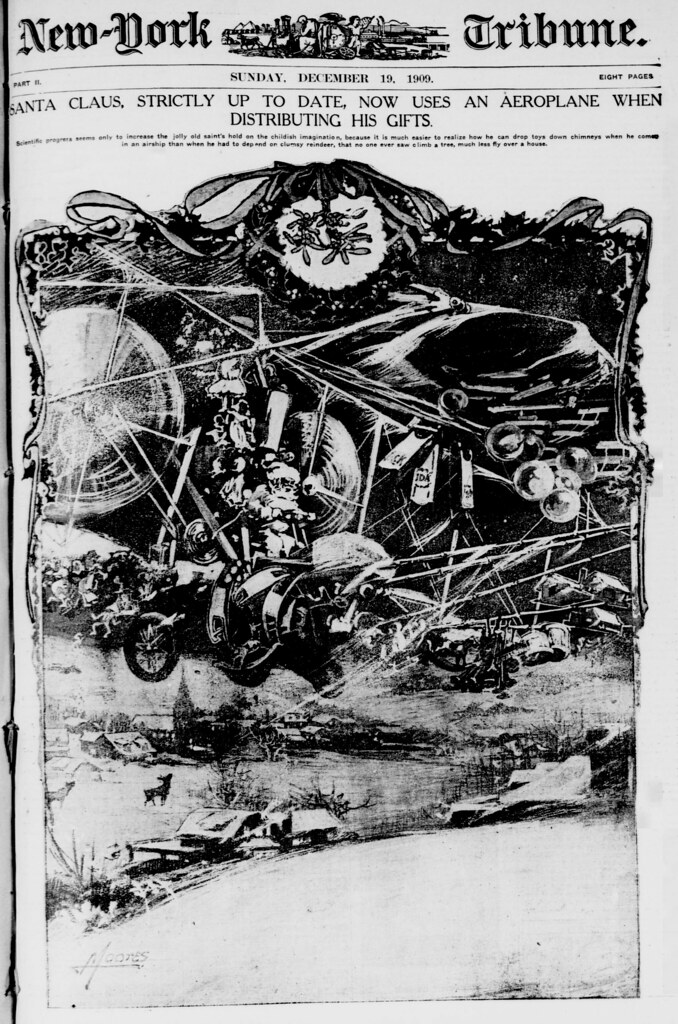
New-York tribune. (New York [N.Y.]) 1866-1924
December 19, 1909, Image 17
Notes: Cover, illustrated supplement.
Format: Newspaper page, from microfilm
Rights Info: No known restrictions on reproduction.
Repository: Library of Congress, Serial and Government Publications Division, Washington, D.C. 20540 USA.
Part Of: Chronicling America (Library of Congress) (DLC) - lccn.loc.gov/2007618519
Persistent URL: chroniclingamerica.loc.gov/lccn/sn83030214/1909-12-19/ed-...
What are photographs doing in a library? We've been acquiring photos since the mid-1800s when photography was the hot new technology. Because images represent life and the world so vividly, people have long enjoyed exploring our visual collections. Looking at pictures opens new windows to understanding both the past and the present. Favorite photos are often incorporated in books, TV shows, homework assignments, scholarly articles, family histories, and much more. The Prints & Photographs Division takes care of 14 million of the Library's pictures and features more than 1 million through online catalogs. Offering historical photo collections through Flickr is a welcome opportunity to share some of our most popular images more widely. REMINDER: The mission of the Library of Congress is to make its resources available and useful. The Library offers broad public access to a wide range of information, including historical materials that may contain offensive language or negative stereotypes. Such materials must be viewed in the context of the relevant time period. The Library of Congress does not endorse the views expressed in such materials.
Estas imágenes vienen de la fantástica colección The Library of the Congress.
9/1/10
Histoire(s) du cinéma, 1988-1998; Jean Luc Godard
___________________
HISTOIRE(S) DU CINEMA Chapter1A - Toutes les Histoires, 1988
Histoire(s) du cinéma is a video project begun by Jean-Luc Godard in the late 1980s and completed in 1998. It is always referred to by its French title, because of the wordplay it implies: histoire means both "history" and "story," and the s in parentheses gives the possibility of a plural. Therefore, the phrase Histoire(s) du cinéma simultaneously means The History of Cinema, The Histories of Cinema, The Story of Cinema and The Stories of Cinema. Similar double and triple meaning, as well as puns, are a recurring motif throughout Histoire(s) and much of Godard's work.
The densest of Godard's films, Histoire(s) du cinéma is an examination of the history of the concept of cinema and how it relates to the 20th century; in this sense, it can also be considered a critique of the 20th century and how it perceives itself. The project is considered the major work of the late period of Godard's career; it is alternately described as an essay and a poem.
The film was screened out of competition at the 1988 Cannes Film Festival.[1] Nine year later, it was screened in the Un Certain Regard section at the 1997 Festival.[2]
Más en la wiki y aquí, la lista de reproducción completa del capítulo.
Room 26 Cabinet of Curiosities

The Eiffel Tower under construction, 1888-1889.

Mack & Mack
(Images from the Bonnie and Semoura Clark Black Vaudeville Collection (Call Number: JWJ MSS 15); for related images see “Ruckus! American Entertainments at the Turn of the Twentieth Century”)

One covers and an interior page from The Blindman,
the Dada magazine published by Marcel Duchamp, Beatrice Wood, and Henri Pierre Roche.
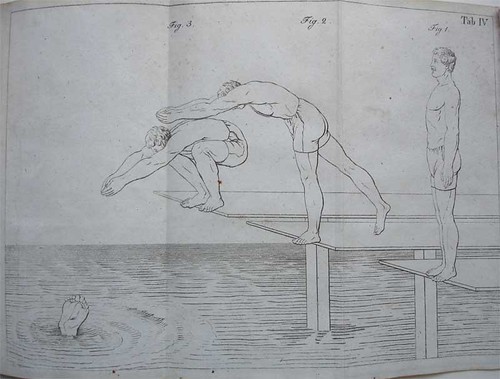
Carl Purkart, Vorschriften für den Schwimmunterricht (München, 1826)

Borderline, APool Film with Paul Robeson (Program)

Atlantic City, New Jersey, 1902.

Guy Debord’s Guide psychogeographique de Paris [1957].
Room 26 Cabinet of Curiosities features new acquisitions, unique documents, and visual and textual curiosities from the collections of the Beinecke Rare Book and Manuscript Library, Yale University. This ongoing exhibition is curated by Tim Young, Associate Curator of the Modern Books and Manuscripts Collection, and Nancy Kuhl, Associate Curator of the Yale Collection of American Literature. Additional information about these and other materials in the Beinecke Library’s collections can be found at the Library’s website: http://www.library.yale.edu/beinecke/
Todo esto y mucho más en la inagotable Room 26 Cabinet of Curiosities.
6/1/10
Reanimation library

The Reanimation Library seeks to assemble an inspiring collection of resources that will facilitate the production of new creative work and promote reflection and research into the historical, legal, and methodological questions surrounding the adaptive reuse of found materials. It strives to provide the necessary space and tools to allow these activities to flourish, and to foster a climate of spirited collaboration.
(...)
In our culture, libraries have the special privilege of dictating which published materials are deemed culturally worthy and worth preserving. To a degree, those materials that are kept within a collection are important and those that are removed are not. Books and other materials are removed from collections for a variety of different reasons: space is in short supply, materials become physically worn, information becomes outdated, and new editions are produced. Whatever the ultimate reason for the de-accession of an item, one result is that a tremendous amount of printed material disappears from the public sphere of information when it exits the library.
Of particular interest to the Reanimation Library is the loss of visual information that occurs during the aforementioned process of weeding. Even though text is often accompanied by images, collection development policies generally assign little weight to the graphic dimension of a work, unless that work happens to be graphically driven (i.e. a book on a visual artist, graphic design, or an atlas). Most library collection development policies place priority on acquiring items with current textual information and replacing items where that information is lacking or outdated. This priority, coupled with the continual production of new editions as fields of knowledge evolve, create the growing fossil record of outdated books—a veritable feast for image archaeologists. The Reanimation Library is committed to building a collection of materials that are rich in visual information, regardless of the currency of their textual information. The Library serves as a repository and, more pertinently, an access point for such materials.
Contemporary cultural production often draws upon earlier cultural materials. Artists, historians, writers, musicians, and scholars all build their creative and intellectual work on the images, ideas, words, and sounds of previous generations. Pastiche, collage, and sampling are fundamental tools of our creative vocabulary. The Reanimation Library presents a fertile environment for patrons who wish to participate in these creative processes. Shiyali Ramamrita Ranganathan's first law of library science states that "books are for use." Through the belief in and promotion of the idea that a book's intended use is not its only use, the Library reanimates books that have, for whatever reason, fallen out of use.
Más en Reanimation libraryThe Chicago Undergroung library

The Chicago Underground Library is a new model for open, location-specific archiving of independent and small press media. We are always seeking books, magazines, zines, journals, broadsides, newspapers, and art books of all types, genres, and print runs from the Chicago area. (And maybe your city, too. Be patient, or ask us how to start your own.)
Open Acquisitions
We accept everything from the area (ever), regardless of perceived quality or importance in order to create a detailed index from which connections among the publications will emerge.
Obsessive Cataloging
Keeping records of everyone who contributed to a work, as well as keywording every subject, allows us to map the evolution (historically and contemporaneously) of Chicago’s communities and movements and encourage the production of new media by providing context, inspiration, and programming designed to support collaboration.
Ongoing Ambitions
Currently focusing on print, the CUL intends to expand into audio, video, performance documentation, and ephemera as our infrastructure permits.
Más en Chicago Underground Library.
Suscribirse a:
Entradas (Atom)