19/5/10

Gender art net


GenderArtNet is an experimental mapping project exploring the interrelation of gender, ethnicity, race, class and sexualities in contemporary Europe.

GenderArtNet’s primary aim is to thematically link the various existing online resources of feminist and queer artists, projects and networks rather than provide yet another user platform for artist profiles. By connecting existing, often remote, online resources, we would like to improve the accessibility and readability of these resources while keeping the memory of feminist artistic and cultural production in the broader Europe alive.

By organising this information in a map, we work to provide contexts, connections, and relations between artists, artworks and networks and between geopolitics and artistic practice. Our starting point is a relational understanding of feminism as a critical, multilayered practice that considers the interrelatedness of various forms of social, political and cultural hierarchies and exclusions along the lines of gender, sexuality, ethnicity, bodily ability, race, class and geopolitical location.


A través de Ptqk, sabemos del proyecto en el cuál colabora Gender art net en el que también están envueltos la gente de Constantvz.

David Rumsey Historical Map Collection


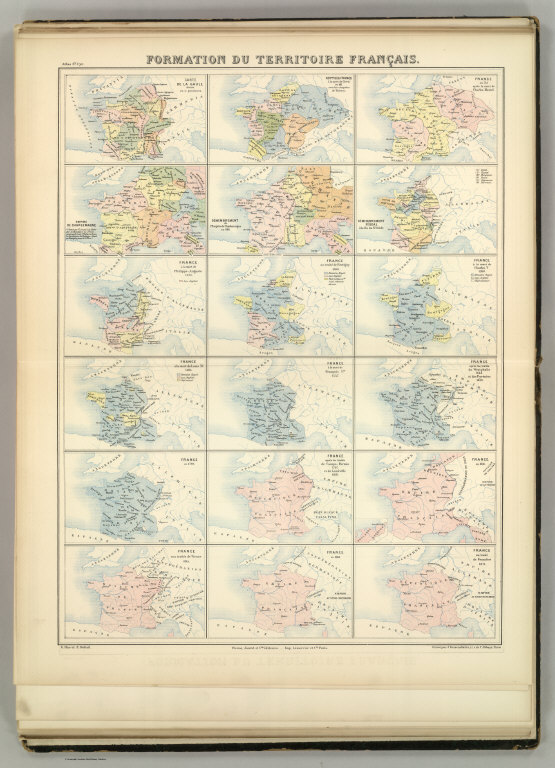
Formation du Territoire Francais. Atlas St. Cyr. G. Hue et E. Dubail. Furne, Jouvet et Cie. Editeurs. Imp. Lemercier et Cie. Paris. Grave par J. Geisendorfer, 12 r. de l'Abbaye, Paris. (1882)


Chimney Peak. Colorado Exploring Expedition frontispiece. J.J. Young from a sketch by H.B. Mollhausen. Lith. of Sarony, Major & Knapp, 449 Broadway, N.Y. In Charge. (Washington: Government Printing Office. 1861. Senate. 36th Congress, 1st Session. Ex. Doc.)


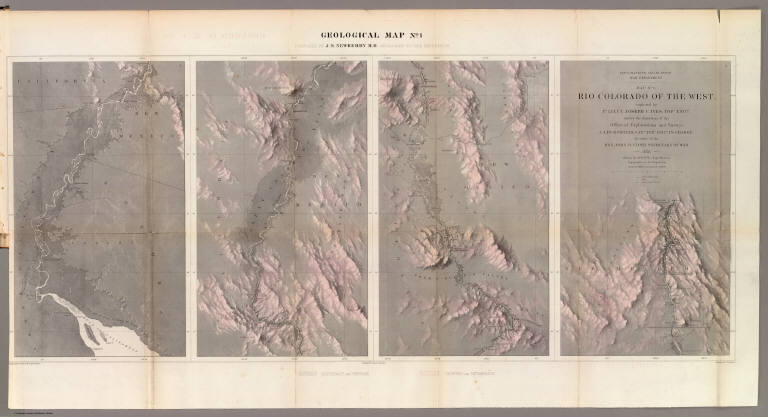
Geological Map No. 1. Prepared by J.S. Newberry, M.D. Geologist to the Expedition. Explorations and Surveys. War Department. Map No. 1. Rio Colorado of the West, explored by 1st Lieut. Joseph C. Ives, Topl. Engrs. under the direction of the Office of Explorations and Surveys. A.A. Humphreys, Capt. Topl. Engrs. in Charge, by order of the Hon. John B. Floyd, Secretary of War. 1858. Drawn by Frhr. F.W.v. Egloffstein. Topographer to the Expedition. Topography by Frhr. F.W.v. Egloffstein. Ruling by Samuel Sartain. Lettering by F. Courtenay.


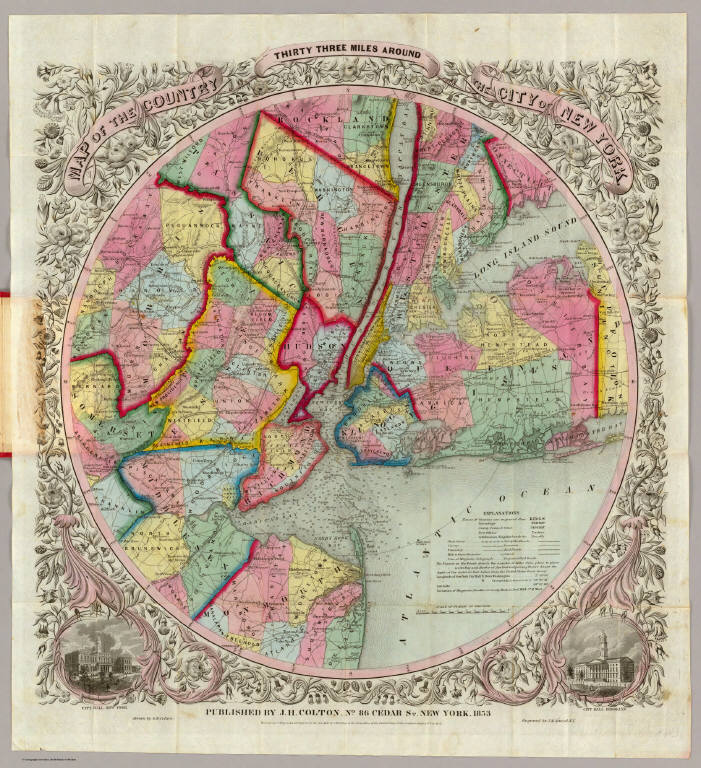
Map Of The Country Thirty Three Miles Around The City Of New York. Published By J.H. Colton, No. 86 Cedar St. New York, 1853. Entered ... 1846, by J.H. Colton ... New York. Drawn by G.W. Colton. Engraved by J.M. Atwood, N.Y.


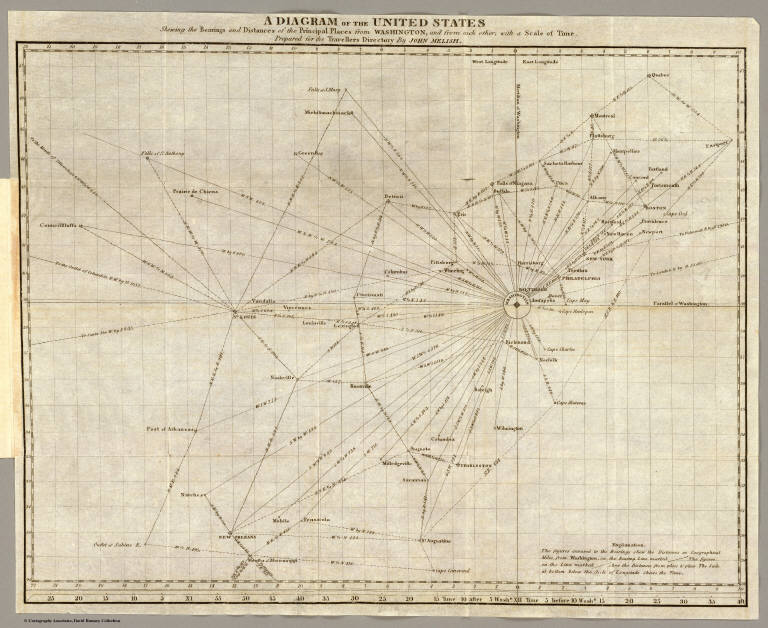
A diagram of the United States shewing the bearings and distances of the principal places from Washington, and from each other, with a scale of time. Prepared for the Travellers directory by John Melish. (Philadelphia: Published by the Author. 1822)


Gran archivo de mapas en David Rumsey Historical Map Collection .

Psiquifotos


Camino Galicia, J. Manual práctico de exploración y examen de las facultades mentales. Imprenta A. Marzo. Madrid, 1924.


López Ibor, J.J. El libro de la vida sexual. Ed. Danae. Barcelona, 1968.


“Arc de cercle” en un hombre. Charcot - Richer, 1885


Es una pena que en el gran blog psiquifotos, las imágenes no sean de más calidad..aún así, recomendamos la visita para ver la gran cantidad de material posteado sobre las relaciones entre fotografía, arte y psiquitaría, introduciendo, entre otras cosas, mucho material bibligráfico de fuentes del territorio español.

30/3/10

Physical and Intellectual Measurement, Eugenetics y Francis Galton


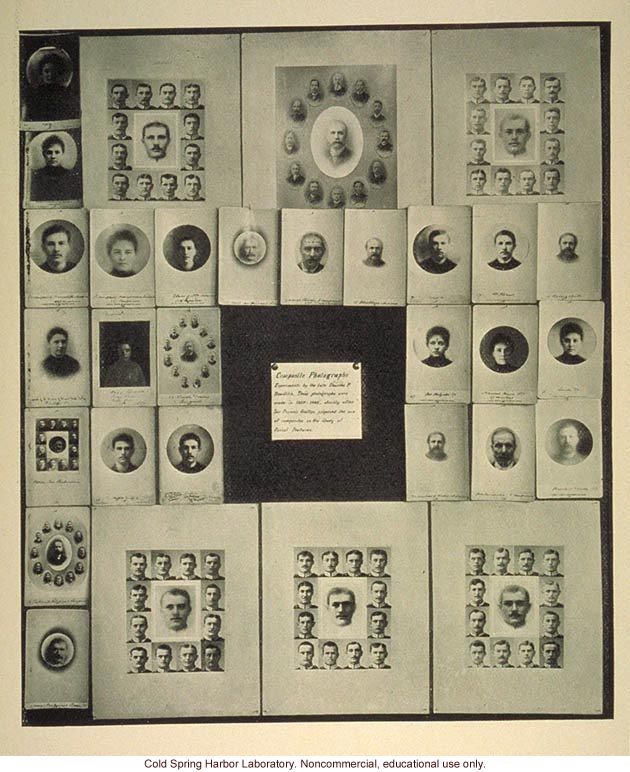
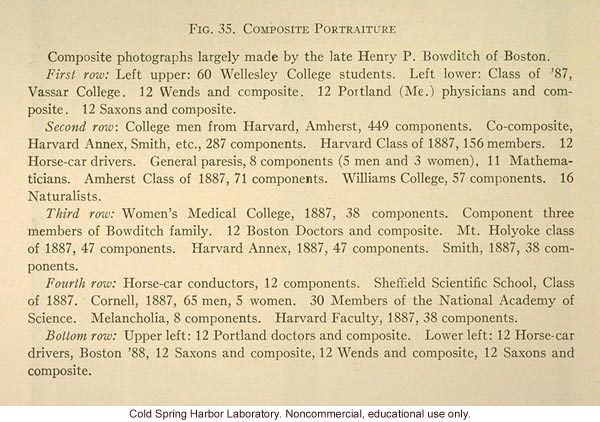
"Composite portraiture," Fig. 35, 1921


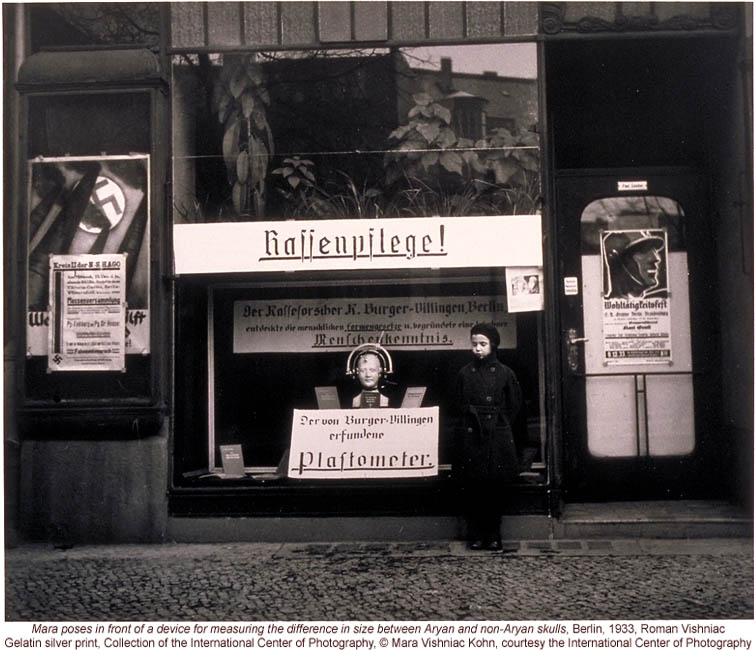
Nazi propaganda in Berlin storefront, including anthropometric device for measuring differences between Aryan & Non-Aryan skulls (by Roman Vishniac), 1933


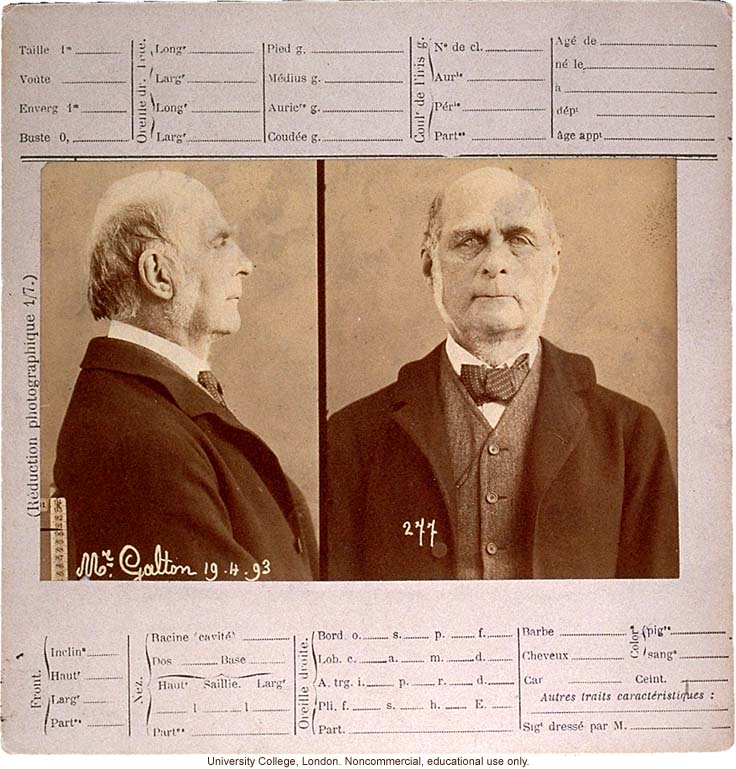
Anthropometry card of Francis Galton, with profile and full-face photos and spaces for key body measurements, taken by Alphonse Bertillon, 1893


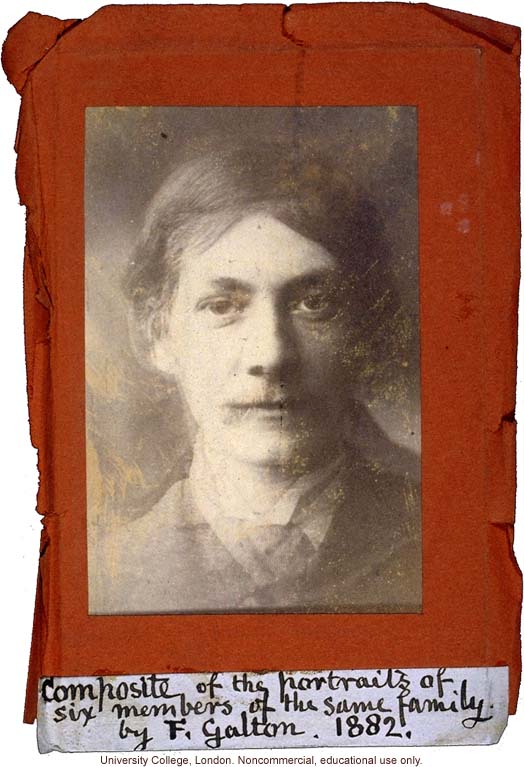
Composite of the portraits of six members of the same family. By F. Galton. 1882.


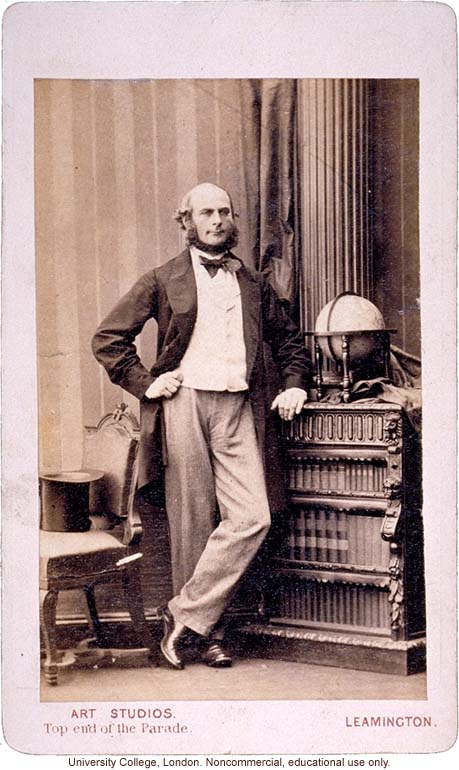
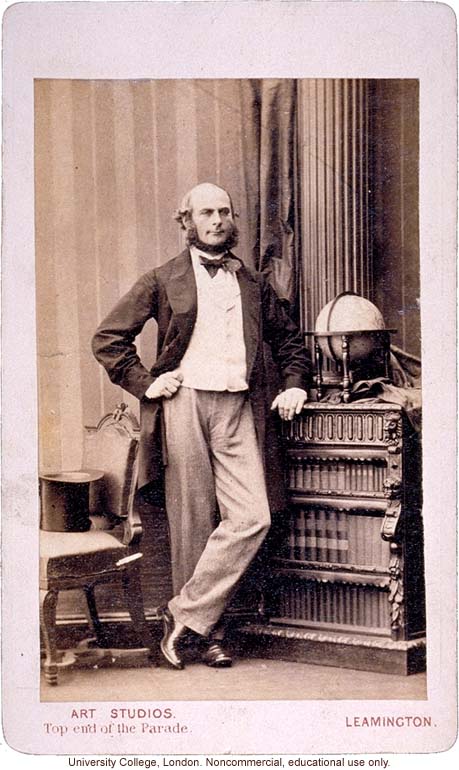
Francis Galton carte de visite portrait, standing
, 1864


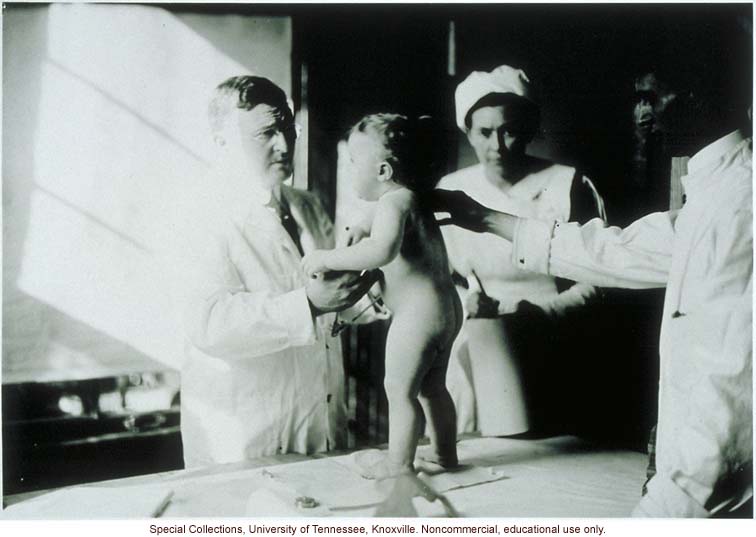
Infant being examined for a Better Babies Contest
, 1910


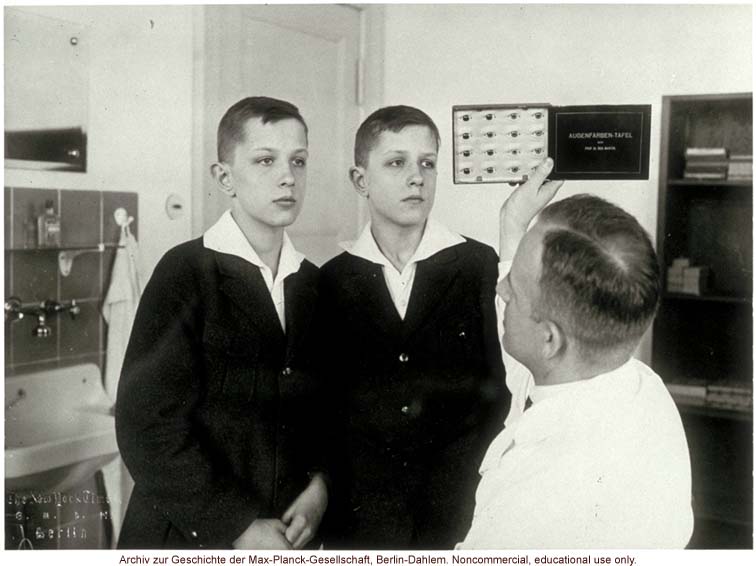
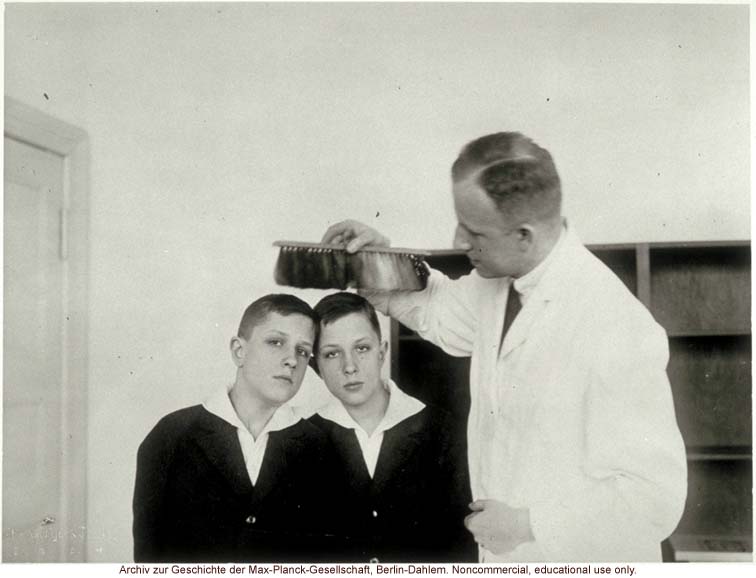
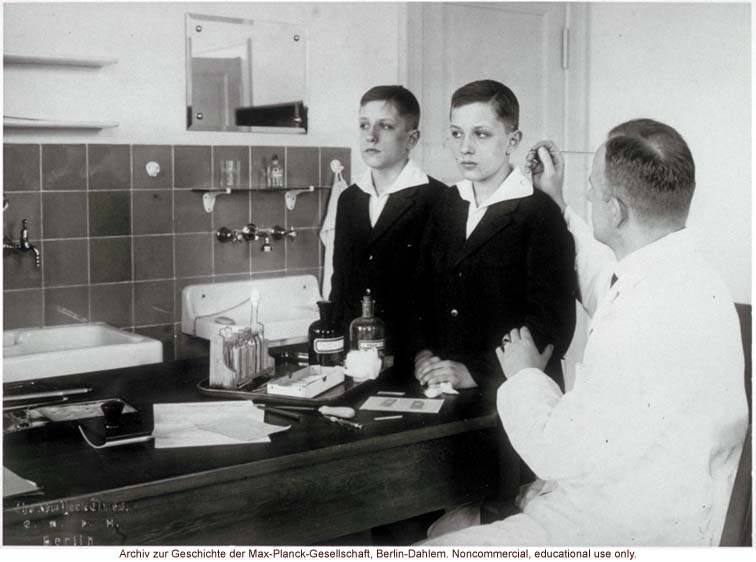
12-year-old male twins undergoing anthropometric study by Otmar Freiherr von Verschuer


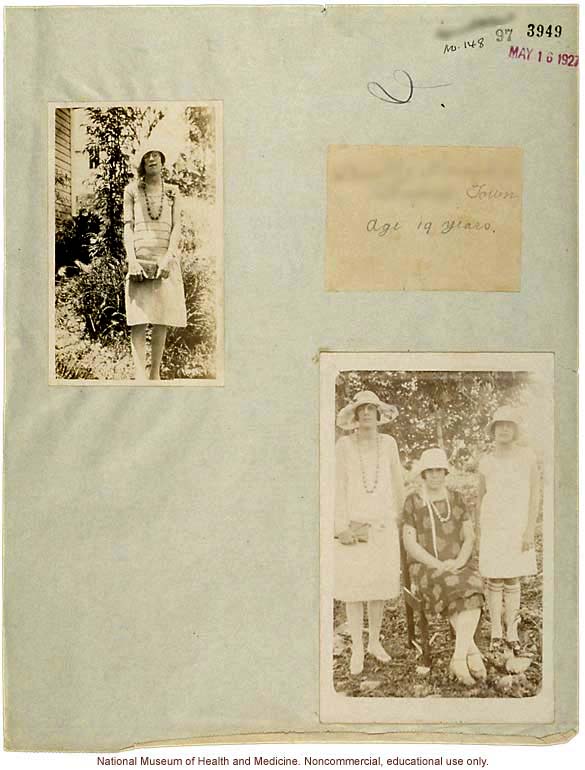
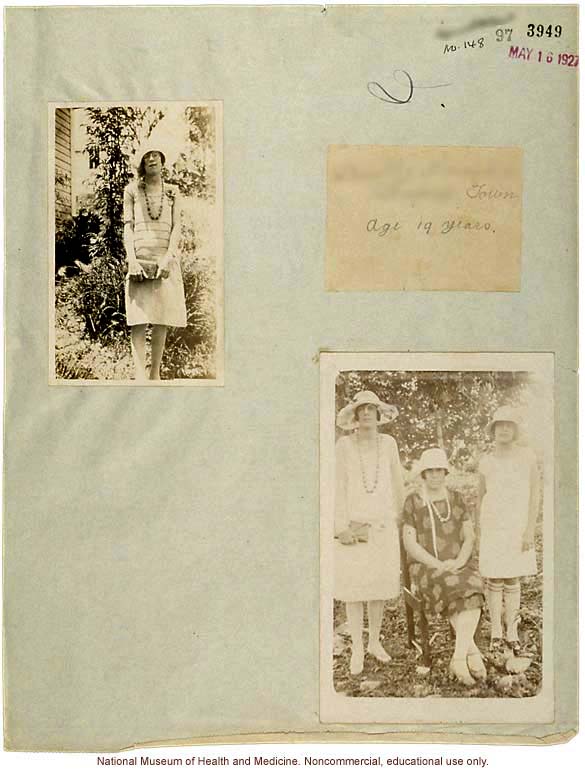
Seaford Town female anthropometric case: photos, measurements, finger prints, Schedule 3; by Morris Steggerda for Race Crossing in Jamaica, 1927


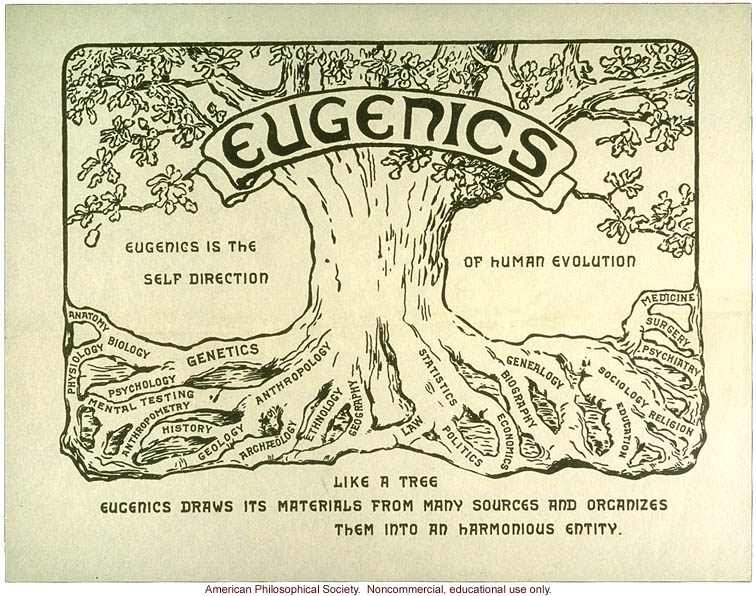
Eugenics tree logo, 1925


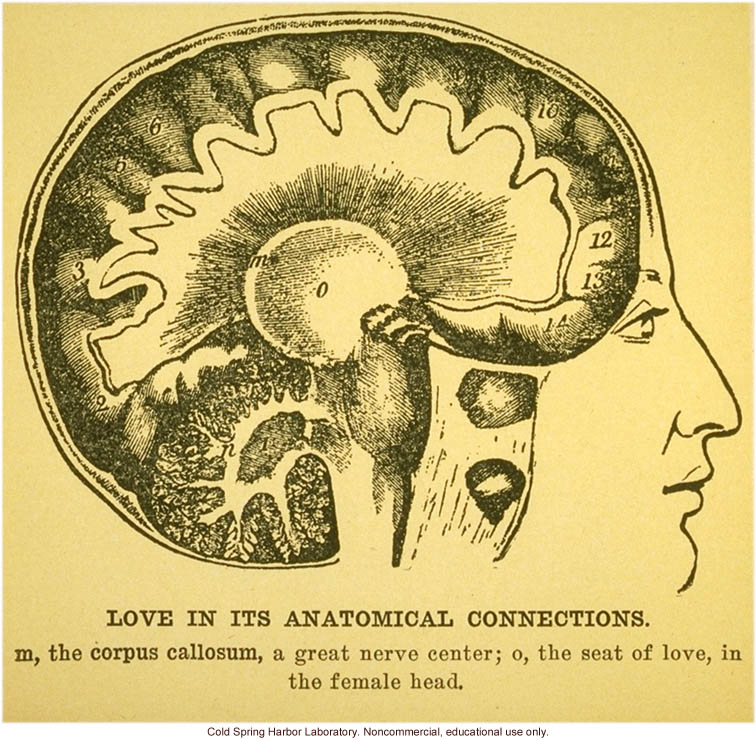
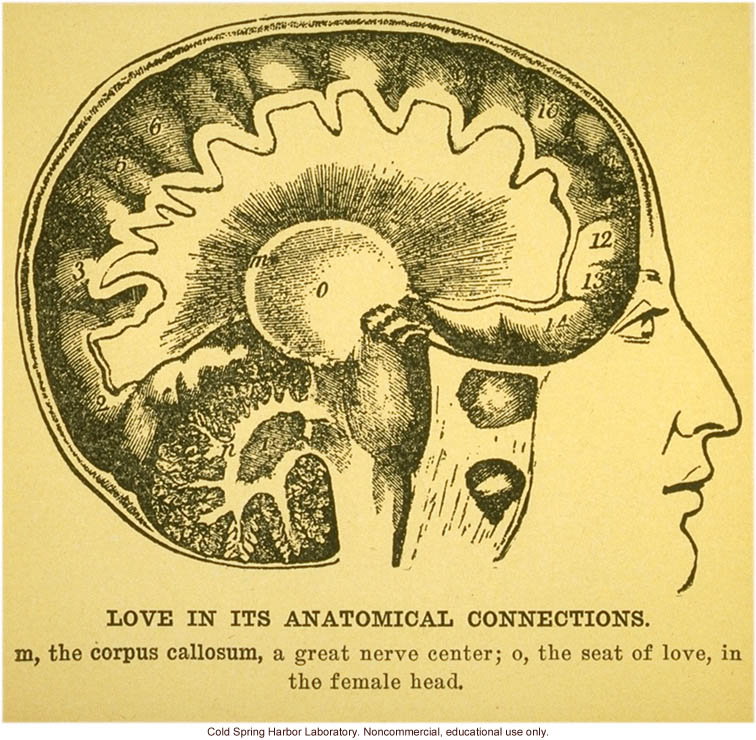
"Love in its anatomical connections"
, 1930


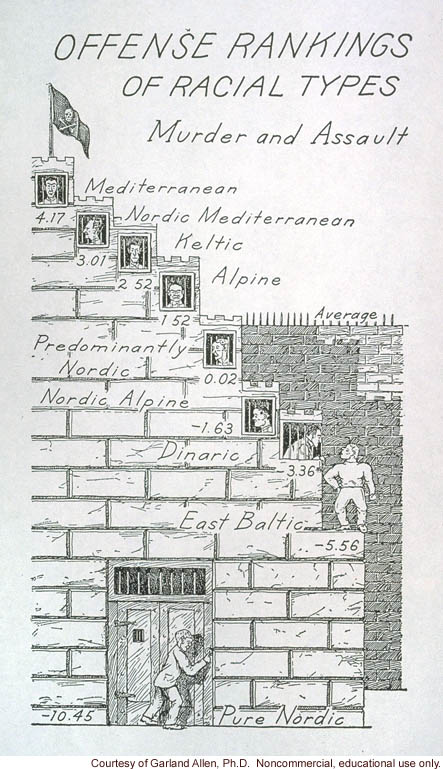
"Offense rankings of racial types: murder and assault"


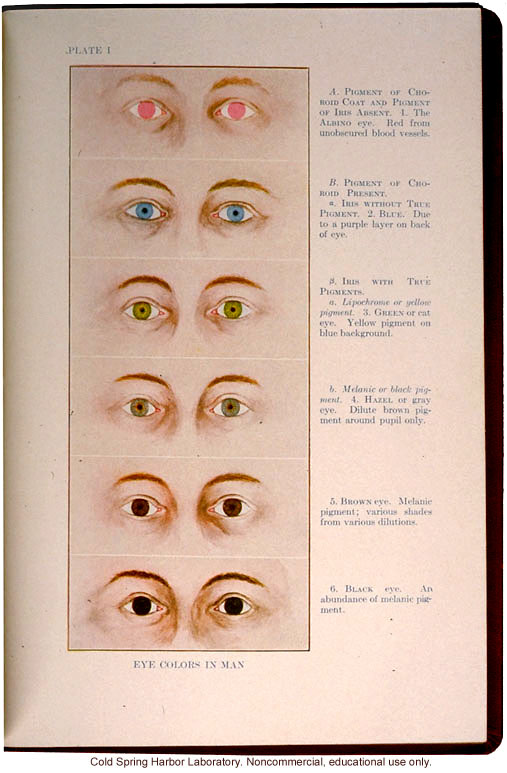
"Eye Colors in Man," from The Trait Book, ERO Bulliten No. 6, by Charles B. Davenport, 1912


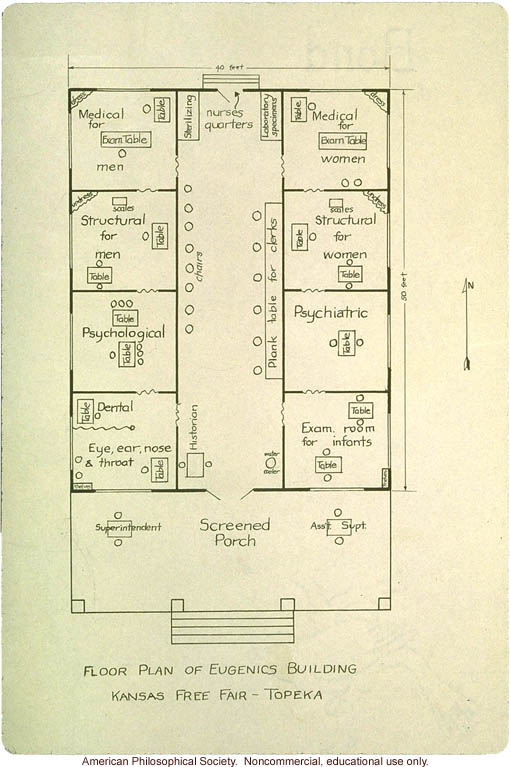
Floor plan Eugenics Building at Kansas Free Fair - Topeka, 1924


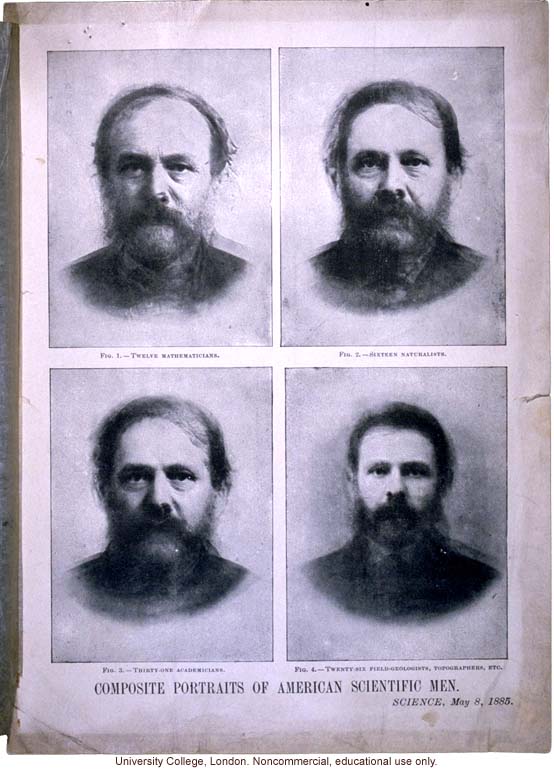
"Composite Portraits of Scientific Men," by Francis Galton, Science (5/8/1885)

Francis Galton imbued eugenics with a penchant for measuring all aspects of the human body. Galton relied heavily on the system for human physical measurements (anthropometry) developed by the French criminologist Alphonse Bertillon. Measurements of variation in human form provided much of the data upon which he and his student Karl Pearson developed modern statistics. American eugenicists hoped to use anthropometry to back up their claims about the superiority of the white race and people of northern/western European origin. Public schools, prisons, and mental hospitals all presented large "captive" populations to measure. Draftees into WWI provided a trove of data from which to determine the prototype (White) "American male" to compare to men of other races and ethnicities.

In most cases, it is not clear what point eugenicists were trying to make with their comparisons of body measurements. Apart from athletic prowess, no relationship has ever been shown between bodily measurements and intelligence or other behavioral attributes. Eugenicists also failed to take into account variables — such as differences in nutrition and health care — that could affect human development and account for differences between groups.

Intelligence tests took human measurement to new levels. In 1905, the French psychologist Alfred Binet developed a measure of "mental age" to help steer elementary students to academic or vocational tracks. Under this system, a child of average intelligence has a mental age equal to his chronological age. By 1910, Binet's mental age was used to generate an intelligence quotient or IQ (mental age/chronological age x 100). IQ scores range from 0 to 200 and fit a bell-shaped curve, with an average IQ of 100. Normal intelligence ranges from 86 to 115. Terms like "moron," "imbecile," and "idiot" described persons with IQs below 86, while "bright" and "genius" were used for scores above 115.

Eugenicists rapidly employed IQ or other intelligence tests to compare different racial and ethnic groups. These comparisons purportedly showed whites were more intelligent than blacks, native-born Americans were more intelligent than immigrants, and northern Europeans were more intelligent than southern Europeans. Educational psychologists believed IQ tests measured innate intelligence, but mostly they measured knowledge of white American culture and language. This underestimated the intelligence of new immigrants and disenfranchised Americans.


Para saber más de esta ida de pinza, visita el Eugenicsarchive. Atención a lo que llevaban las ideas del polímata Galton.
Cómo es algo difícil de navegar la página, aquí os dejo el archivo de imágenes.

28/3/10

Barbaro; The Life of Khaireddin Barbarossa


Barbarossa Hayreddin Pasha (Turkish: Barbaros Hayreddin Paşa or Hızır Hayreddin Paşa; also Hızır Reis before being promoted to the rank of Pasha and becoming the Kaptan-ı Derya (Fleet Admiral) of the Ottoman Navy) (c. 1478 – July 4, 1546), was a Turkish privateer and Ottoman admiral who dominated the Mediterranean for decades. He was born on the island of Midilli (Lesbos in today's Greece) and died in Istanbul.


His original name was Yakupoğlu Hızır (Hızır son of Yakup). Hayreddin (Arabic: Khair ad-Din خير الدين, which literally means "Goodness of the Religion (of Islam)". This was an honorary name given to him by Sultan Suleiman the Magnificent. He became known as Barbarossa (Redbeard) in Europe, a name he inherited from his older brother Baba Oruç (Father Aruj) after Oruç was killed in a battle with the Spanish in Algeria. Coincidentally, this name sounded like "Barbarossa" (Redbeard) to the Europeans, and he did have a red beard.


(...)


Seguir leyendo sobre la vida de Barbarossa y ver más imágenes deliciosas de mapas.

OPEN SABADELL MAPS

L'àmbit de les intervencions artístiques a l'espai públic ha experimentat als darrers anys un important creixement, fruit d'una genealogia que beu de la tradició de l'art públic, la performance, l'activisme social, el tactical media i els nous processos de participació ciutadana.

Dins d'aquest ambit, les arts locatives -l'aplicació dels sistemes de geolocalització contemporanis com la telefonia mòvils, el GPS o GoogleMaps a les pràctiques artístiques- representen un dels resorts més potents de dinamització de la creació contemporània i una invitació a rellegir i participar en l'espai públic.

Open Sabadell Maps operarà de manera específica en el context sabadellenc i amb els sabadellencs, mitjançant un anàlisi meta-referencial de les evolucions del seu context social i urbanístic aprofitant les potencialitats dels nous sistemes de mapejat de codi obert.

7, 11 i 14 de maig del 2010: sessions teòriques *
18, 21 i 25 de maig del 2010: sessions pràctiques

Direcció: SiteSize
Professor convidat: Ivan Sanchez

Amb la col·laboració de:
ESDI
YProductions

Desde l´estruch

Dripping World Map; Atelier Van Lieshout 2009


Dripping World Map;
Atelier Van Lieshout 2009