Mostrando entradas con la etiqueta mapa. Mostrar todas las entradas

5/11/12

Lines of flight: urban resistance, dreamscapes and social play; Lorena Muñoz-Alonso, 2012

Some theoretical notes concerning the exhibition Desire Lines

Wayfarer, your footprints
are the way, and nothing else;
wayfarer, there is no path,
you make the path by walking.1
 Antonio Machado, Campos de Castilla, 1912

Exactly one hundred years ago, in one of his most memorable poems, Antonio Machado exhorted us to become more conscious of our choices, to assume what is perhaps the most transcendental responsibility of our existence as individuals: forging our own path in life rather than being swept along by social pressure, fear or the paralysing shadow of apathy. In that poem, the path is a metaphor for life, a powerful image no less apt for being somewhat hackneyed. It is the perfect allegory for an existential journey, with all of its inherent forks, choices and decisions.
‘Desire lines’ is the name given to the alternative trails that emerge in a landscape— chosen itineraries eroded by wayfarers’ footprints, initially in an improvised manner that follows a transgressive urge, until they are consolidated and widened as a result of the kind of subversion that surpasses the individual to become collective. No path is ever made by one individual: it requires a group. It takes the repeated footsteps of many people to create these indelible marks.
Image of a desire line

This metaphor, which evokes both real and imaginary paths, is the starting point for the exhibition, which features the work of eleven international artists who explore subversive ways of navigating, using and living the city.  The eleven works selected for Desire Lines take the urban fabric to be a complex, contradictory realm, brimming with possibilities. A broad stage with the capacity to both repress our deepest, destabilising desires and act as a catalyst for atavistic spirits of resistance that can trigger collective action. In this scenario the figure of the artist is key, as the embodiment of the metropolitan denizen. The artist is the city dweller par excellence, often roaming like a nomad from one metropolis to another, leading a type of existence that normally verges on the precarious—one of the many results of the gentrification process that the urban theorist and economist Richard Florida has been studying since the beginning of the 21st century2—and therefore being a privileged witness to the joys and miseries of life in the big city.

If the artist exemplifies the citizen, he is thus the hero of the urban odyssey that billions of us face every day. The influential essay The Practice of Everyday Life3 (1984) by the theorist and scholar Michel de Certeau is dedicated to the “ordinary man. To a common hero, an ubiquitous character, walking in countless thousands on the streets. […] This anonymous hero is very ancient. He is the murmuring voice of societies. […] We witness the advent of the number. It comes along with democracy, the large city, administrations, cybernetics. It is a flexible and continuous mass, woven tight like a fabric with no rips nor darned patches, a multitude of quantified heroes who lose names and faces as they become the ciphered river of the streets, a mobile language of computations and rationalities that belong to no one.” It is hard to think of a more eloquent and poignant way to express the loss of identity and agency that the individual endures within an oppressive urban context. The artists and works featured in this show attempt to incite resistance to this situation, to remind us that we can choose our own path; that sometimes empowerment is found in the most inconsequential and impromptu decisions and actions.

De Certeau described these activities, imbued with a tremendous subversive potential, as ‘tactics’, as opposed to ‘strategies’ –the institutional processes that establish the rules and conventions that govern societies. Tactics are the creative opportunities that operate between the gaps and slips of conventional thought and the patterns of everyday life. Of the contemporary philosophers who have promoted this type of liberating, playful, non-conformist behaviour, one of the most instrumental was undoubtedly Guy Debord, leader and founding member of the Situationist International (IS). This revolutionary group, created in 1957, reached its peak of influence with the publication of Society of the Spectacle (1967)4 and the subsequent May ’68 protests in Paris, a movement that borrowed both its ideas and most enduring slogans (such as the famous “Ne travaillez jamais!”). The group’s philosophy was based on the construction of ‘situations’ or environments in which one or more individuals were stimulated to critically analyse their everyday lives so they could identify and pursue their true desires. These ideas, developed by the artist Constant Nieuwenhuys alongside Debord, eventually crystallised into a fully fledged plan of action. Constant dedicated years to this project, entitled New Babylon, where he applied the concepts of what he called ‘unitary urbanism’. Because the Situationist critique of 20th-century urbanism questioned above all the degree of citizen participation, this “new Babylon” proposed a new form of urban planning based mostly on the concepts of mobility and play. Rather than a conventional urban development plan, this model fostered critical activities designed to promote participation in the city through a ‘mobile space of play’ and the construction of ‘situations’.


Guy Debord, Guide Psychogeographique de Paris: Discours Sur Les Passions D’Amour, 1957
The idea of play, of understanding the city as a space in which to act out our most pressing desires, is central to this philosophy and is put into practice through the exercise of ‘drifting’ (dérive):
One of the basic Situationist practices is the ‘dérive’, a technique of rapid passage through varied ambiances. ‘Dérives’ involve playful, constructive behaviour and awareness of psychogeographical effects, and are thus quite different from the classic notions of journey or stroll. In a ‘dérive’ one or more persons during a certain period drop their relations, their work and leisure activities, and all their other usual motives for movement and action, and let themselves be drawn by the attractions of the terrain and the encounters they find there. 5

Guy Debord, “Theory of the Dérive”

The notion of drifting as productive or constructive play is particularly relevant in the context of this exhibition: play in the sense in which Dutch historian and cultural theorist Johan Huizinga explored it in his controversial essay Homo Ludens6, written in 1938, a time of utter political and social turmoil when the idea of play seemed, at best, a far-fetched irony and, at worst, an inappropriate and rather sick joke. According to Huizinga, the notion of play is inherent to the human condition and even predates it, as evidenced by the fact that it is found in the vast majority of animal species. Huizinga argued that the intrinsic value of play, besides being essential to the generation of culture, is that it permeates archetypal activities of human society such as language, myths and rituals. Rejecting the notion of play as something that is “not serious”, Huizinga explained that play creates a transitory order (or a set of rules), a community of players and a feeling of tension or instability, thus generating collective situations and social exchanges that constitute the first step towards the creation of ‘cultures’.


Anna Halprin, City Dance, 1976-1977. Performance on the streets of San Francisco

For example, Looking Up (2001) by Francis Alÿs, a work present in this exhibition, is a video documentation of an action in which the artist walks into the middle of Mexico City’s busy Plaza del Zócalo and, standing impassively on the same spot, starts looking up at the sky. A group of passers-by, surprised and curious, gradually gather behind the artist, trying to see for themselves the elusive sight he is so keenly observing. Looking Up is, in many ways, a practical joke turned into an artwork, but it is a joke that unveils some distinctive human traits: for instance, the fact that groups tend to follow a leader like a herd of animals, often without the slightest guarantee of a worthwhile outcome. More positively, Looking Up examines curiosity and play as agents that mobilise groups, reassuring us of our capacity to respond to events collectively.

The need to overcome that passive ‘herd’ mentality was also staunchly advocated by Gilles Deleuze and Félix Guattari in their seminal philosophical treatise Anti-Oedipus7 (1972), which denounced and challenged the human urge to repress oneself by means of ‘territories’ such as work, family, political parties or education: in short, any social construct born out of the exercise of power relations. To combat this drive and achieve what they called ‘deterritorialisation’, thereby triggering a chain reaction leading to change, it is necessary to forge ‘lines of flight’: brand-new paths in which one can break away from the material of the past.

That such ‘lines of flight’ seem to recall the concept of desire lines is no mere coincidence. For Deleuze and Guattari, desire (never in its strictly sexual sense) is the real force that can mobilise our freer and inevitably more transgressive impulses. This is why the aforementioned ‘territories’, from the workplace to the city, are such excellent machines for repressing our desires, making us docile and obedient as a result of the eternal battle between the social machines and us, the desiring-machines. As Deleuze and Guattari argue so eloquently throughout Anti-Oedipus, desire is socially repressed because any sign of uncontrolled behaviour has the capacity to destabilise the prescribed symbolic order. The lines that stem from desire can sabotage hegemony.

Desire lines—the real and imaginary ones—are an unmistakable symptom of the transgressive capacity of an individual desire that becomes a collective impulse. They symbolise the small acts of urban resistance that emerge from a strong impulse to deviate from the paths created and imposed by others. Regardless of the form these disruptions might take within the symbolic order—games, poetic acts, jokes, minor sabotages or a revolutionary and violent explosion—such transgressions can and should be extrapolated onto the field of human existential behaviour. They should be valued for what they are worth and used as tools for reviving the sensation, buried beneath layers of bureaucracy and social norms, that every life, every fate, is unique and worth fighting for, from the smallest routine struggle to the most pyrrhic battle. When disobedience leaves such a tangible mark, one must acknowledge it and take notice, rather than turning a blind eye, as evidenced by the protests that have shaken the world over these last two years, 2011 and 2012, from the 15 May Movement to the worldwide demonstrations of Occupy.

The works featured in Desire Lines represent different spirits of insurgence as well as tactics for appropriating and celebrating the city’s latent creative potential. We are honoured that artists as inspiring as Lawrence Abu Hamdan, Mark Aerial Waller, Francis Alÿs, Francisca Benítez, Mircea Cantor, Filipa César, Cyprien Gaillard, Regina de Miguel, Laura Oldfield Ford, Alejandra Salinas and Aeron Bergman, and John Smith have accepted our invitation to participate in this project and allowed us to exhibit their stimulating works, lending consistency to a set of enthusiastic ideas. It’s the turn of the audience now. We hope this journey is as enriching for them as it has been for the two curators.
-
This essay is part of the catalogue of the exhibition Desire Lines, curated by Lorena Muñoz-Alonso & Bárbara Rodríguez Muñoz.
The exhibition will open on the 21st of November 2012 at the Espai Cultural Caja Madrid in Barcelona and will run until the 13t of January 2012.
Catalogue design by David G. Uzquiza.
-
Bibliography
1. This poem belongs to the anthology Campos de Castilla which Antonio Machado first published in 1912. Campos de Castilla, Madrid,Cátedra, 1992. Translation by the author of the essay.
2. Richard Florida, The Rise of the Creative Class: And How It’s Transforming Work, Leisure, Community and Everyday Life, New York, Basic Books, 2002.
3.  Michel de Certeau, L’invention du quotidien, tome 1: Arts de faire, Paris, Gallimard, 1990. (Published in English as The Practice of Everyday Life.)
4. Guy Debord, La sociéte du spectacle, Paris, Buchet-Chastel, 1967. (Published in English as The Society of the Spectacle.)
5. Théorie de la dérive was originally published in Internationale Situationniste no. 2 (Paris, December 1958). A slightly different version had appeared in 1956 in the Belgian Surrealist magazine Les Lèvres Nues no. 9. (Published in English as “Theory of the Dérive”.)
6. Johan Huizinga, Homo Ludens, Boston, Beacon Press, 1955.
7. Gilles Deleuze and Félix Guattari, Capitalisme et schizophrénie. L’anti-Œdipe, Paris, Les Éditions de Minuit, 1972. (Published in English as Anti-Oedipus: Capitalism and Schizophrenia.)

13/6/12

Portulanos


Detail of the Catalan Atlas of 1537. Names are written head down on the photo, because of the way they are written following the coastline.

Las cartas portuláneas, también conocidas por el nombre de portulanos, son mapas que hicieron posible el uso de la brújula. Aparecen en el siglo XIII y continúan elaborándose en varias centurias, incluso muy avanzada la Edad Moderna, aunque son productos típicos de los s. XIV y XV principalmente. Se caracterizan por tres circunstancias:
La cartografía alcanzó un gran desarrollo gracias a los portulanos.

1/3/11

Mapa de las relaciones de Facebook


Facebook intern Paul Butler has been poring through some of the data held by the social networking firm on its 500m members.

The map above is the result of his attempts to visualise where people live relative to their Facebook friends. Each line connects cities with pairs of friends. The brighter the line, the more friends between those cities.

After tweaking the graphic and data set it produced a "surprisingly detailed map of the world," he said in a blog post.

"Not only were continents visible, certain international borders were apparent as well," he wrote.

"What really struck me, though, was knowing that the lines didn't represent coasts or rivers or political borders, but real human relationships."

However, large chunks of the world are missing, such as China and central Africa, where Facebook has little presence.

Desde aquí.

Este detallado mapa del mundo donde se visualizan las relaciones humanas nos da una idea muy aproximada de la concepción de que tipo de relaciones humanas (y las que no) son susceptibles de ser contempladas en un mapa del capitalismo. Podríamos decir capitalismo de ficción, cómo lo denominaba Verdú en el estilo del mundo, aquel que aspira a gustar - tal como bien hemos podido en la película la red social.

De paso, apuntar que con esta película deberíamos levantar la ceja en relación a como aparece representado el personaje de Sean Parker, creador de Napster, presentado como un ser humano vicioso y que incita al vicio, un chupasangres sin escrupulos en despedir y casi como un pederasta...¿qué se puede esperar del creador de un sitio de intercambio P2P?

16/11/10

"Art and Cartography - Cartography and Art" 2008


Buscando artistas para un futuro proyecto, me he encontrado este simposio organizado por The Research Group Cartography y este libro de aquí encima sobre arte y cartografía.

Dentro de los participantes en la exposición que acompañaba el simposio, hacen tilín Michael Aschauer, que tiene proyectos como el de 0euro o el escaneado del Danubio y el 4816 de Evamaria Trischak.

15/6/10

Displacement Series #03: Open Talks + Teufelsberg


Ayer los de PISO organizamos en el Altes Finanzamt el primero de los Open talks dentro del proyecto Displacement:
Displacement Project - PISO Colective

Within the scope of what has been called the creative class, it has been developed an ongoing need for mobility, either by weak labour conditions that force someone to move in order to search for subsistence; or due to the desire of accessing ‘’ways of doing’’, different from the departure point.
Beyond judging this need as a positive or a negative influence, we have initiated a process of research on how the notion of Displacement affects processes of cultural production.
One of the main reasons why we took this concept lies in its breadth _ in its polysemic capacity and in the multiplicity of its narrative pathways, not necessarily linear. Thanks to this, we can analyze cause and effect, reference and referent from a creative reading attitude.
Displacement is a generative process, through which Piso Collective articulates a dynamic series of work that reflect on interrelated concepts with the idea of:
cultural production, space, place, nation, border, territory, travel, symbol,
history, context, de-contextualization, identity, network, self-organization,
strength/resistance, empathy, otherness, anachronism, mirror neurons, sequence,
dyslexia, shift, memory, eco ...

Displacement Series: Open Talks
In June we initiate a series of conversations with invited collaborators.
These working tables will be documented to create an archive to be integrated in the exhibitions and available in our webpage.
The guests that will present their projects this month are
Rinus Van Alebeek (musician, writer and Staalplaat organizer)
and
Jonathan Saldanha (musician, researcher and Soopa Colective/ Label director)
After the conversation the Rinus Van Alebeek and Jonathan Saldanha will present a very special improvisation using the content of the "normationist" drifting road trip tapes that were recorded in 2005.


Los hinterhof de Berlín son como patios de vecinos pero tienen la cualidad de en muchas ocasiones permanecer abiertos y de alguna manera, semi-públicos; yo siempre que veo la oportunidad, entro en ellos a ver que me encuentro: tiendas de segunda mano, arquitecturas interesantes, espacios culturales independientes o simplementes lugares agradables.

El open talk fué en el Hinterhof del Altes Finanzamt dónde hay una bonita mesa de madera (y otra de ping pong a la que le estamos sacando mucho rendimiento). Esta mesa suele ser sitio dónde a veces algunos de los chavales del barrio mayoritariamente turco de Neukölln se reunen para fumar unos pitillos por tarde. Ayer, cuando iniciamos la presentación del proyecto, un grupo de chavales se presentó allí y se encontró su (¿nuestro?) espacio ocupado.

Trás una primera fase de cierto cachondeo, le explicamos el tema sobre el que estabamos trabajando, el displacement, y se intregaron a la charla durante un rato y mientras Rinus y Jonathan presentaban sus proyectos -que se formalizan con performance, sonido y publicaciones de discos/cassettes-, tomaron la palabra e introdujeron allí dentro de la conversación durante el rato que estuvieron el conflicto que hay entre Israel y Turquía.

No deja de ser curioso que estos chicos introdujesen ese tema del conflicto para aborar la temática central de nuestro proyecto.

Los proyectos tanto de Rinus como de Jonathan se formalizan con sonido como decía arriba. Pero el discurso que realizan tienen de una forma muy consciente en su elaboración las relaciones que surgen entre la idea de viaje, la ficción y su relación con lo real, la mística, la cartografía, la representación del territorio y el uso de la tecnología que se sobre este se hace.


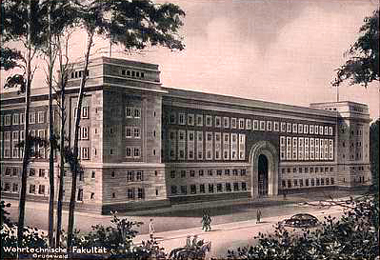
Geplante Wehrtechnische Fakultät

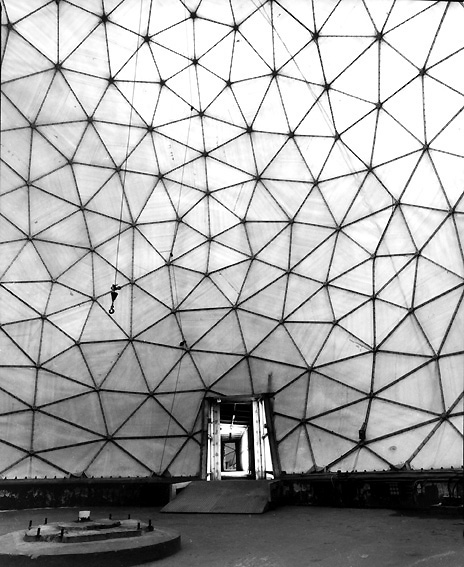
Uno de los puntos fuertes sobre los que la conversación pasó fué la relación que existe entre sonoridad, representación, mística, arquitectura y tecnología de guerra: el proyecto que Jonathan esta desarrollando este mes en Berlín estudia la sonoridad propia de Teufelsberg, estación de radar contruida para el espionaje en la Colina del diablo, una montaña artifical contruida con la acumulación gigantesca de los restos de las ruinas de Berlín tras la II Guerra Mundial y asentada sobre la escuela militar (Wehrtechnische Fakultät) del arquitecto nazi Albert Speer.
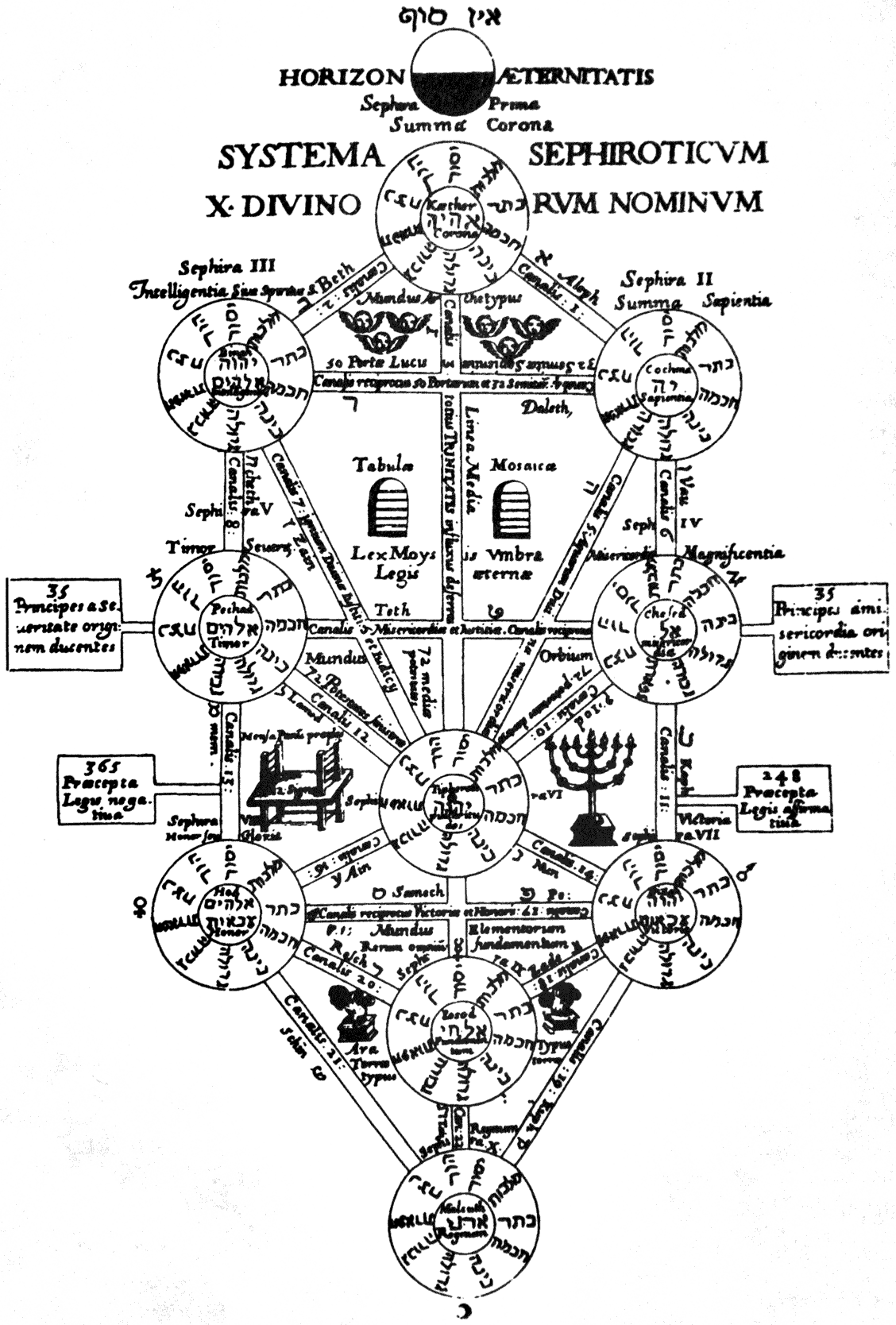
Tree of life, Athanasius Kirchner

Es de sobra conocido el interés que los nazis tenían por la parapsicología, el ocultismo y el sistema místico de energía Vril (atención, que esta energía venía de un cuento de ficción del siglo XIX). Jonathan en su investigación emparenta esta referencia con el amigo íntimo del gran cartógrafo Mercator, el también cartógrafo, estudiante de la Cábala y mago John Dee:

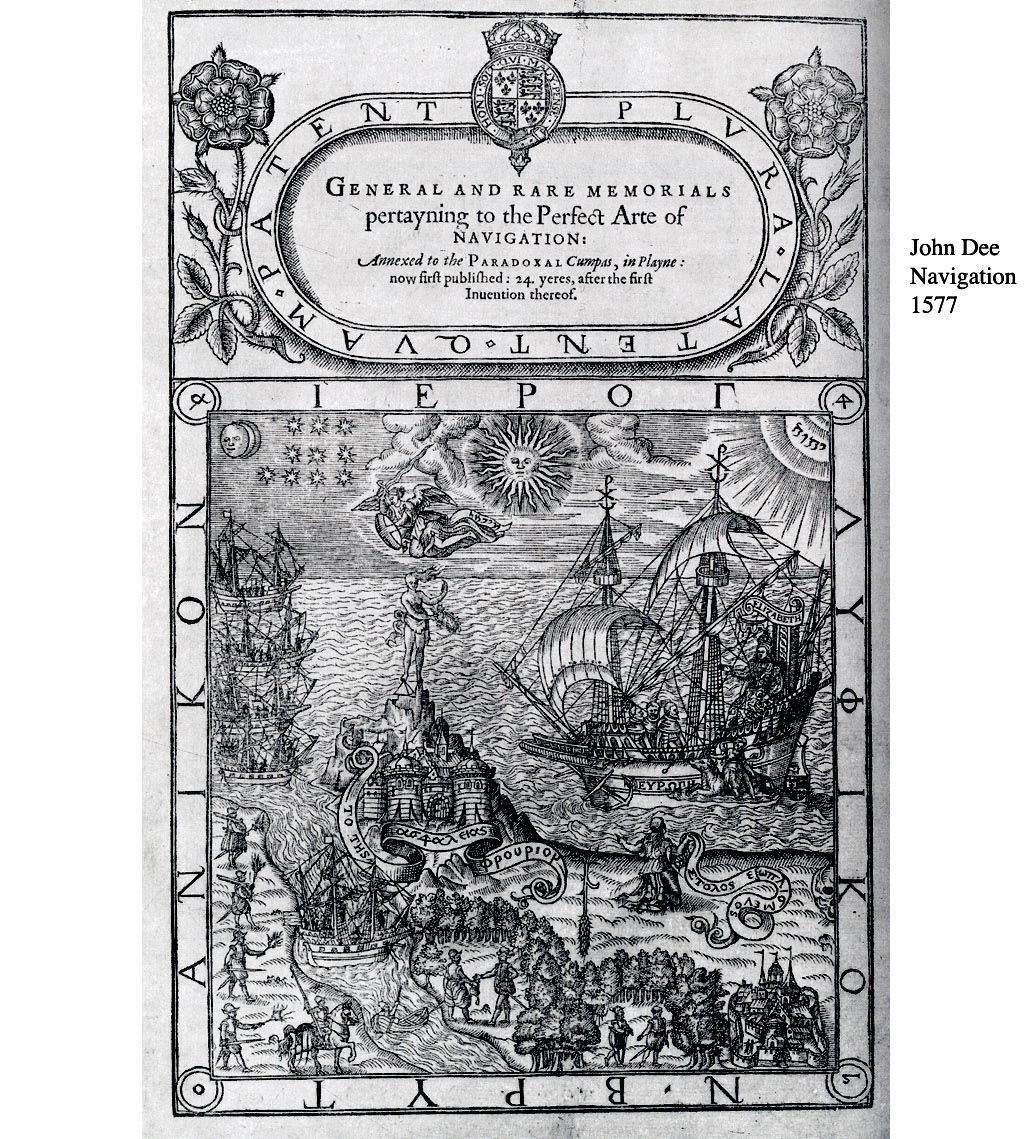
Navigation, John Dee, 1577

Navigation, Instruments, Cartography Almost by definition his astrological activities had practical ends in view, but I am not listing astrology as a technology. Advice on navigation and expedition projects, especially for the Muscovy Company for more than thirty years, from about 1551 to 1583. He prepared, or helped to prepare, a considerable list of considerable pilots, including Richard Chancellor, Stephen and William Borough, Martin Frobisher, Humphrey Gilbert, John Davis, and Walter Raleigh. He wrote the Perfect Arte of Navigation (which is, I gather, more about the geography of exploration than about the science of navigation), 1577. He is said to have made optical instruments, though I hardly know what this could mean. He did bring astronomical and navigational instruments into England when he returned from the continent in 1550. About 1553 he developed what he called the paradoxal compass and/or paradoxal chart. One source calls it a circumpolar chart for navigation in polar regions. Taylor (whom I trust) calls it a device for laying out a series of rhumbs that would lie along a great circle route. There was also a compass of variation. He designed a large radius astronomicus for Thomas Digges to observe the new star of 1572. Dee continued to work at the development of scientific instruments. While consultant to the Muscovy Company Dee assembled geographic and nautical information and prepared charts for navigation in the polar regions. De Smet calls him the central figure in the development of scientific cartography in England, and he suggests that Dee's influence was transmitted to the Netherlands where it helped form Dutch cartography in its so-called golden age.

(...)

John Dee's 1582 polar chart

(...)
From 1570 Dee advocated a policy of political and economic strengthening of England and imperial expansion into the New World. In his manuscript, Brytannicae reipublicae synopsis (1570), he outlined the current state of the Elizabethan Realm and was concerned with trade, ethics, and national strength. His 1576 General and rare memorials pertayning to the Perfect Arte of Navigation, was the first volume in an unfinished series planned to advocate the rise of imperial expansion. In the highly symbolic frontispiece, Dee included a figure of Britannia kneeling by the shore beseeching Elizabeth I, to protect her empire by strengthening her navy. Dee used Geoffrey's inclusion of Ireland in Arthur's imperial conquests to argue that Arthur had established a ‘British empire’ abroad. He further argued that England exploit new lands through colonization and this vision could become reality through maritime supremacy. In making these arguments, Dee is credited with the earliest use in English of the terms Brytish Iles and Brytish Impire.

(...)

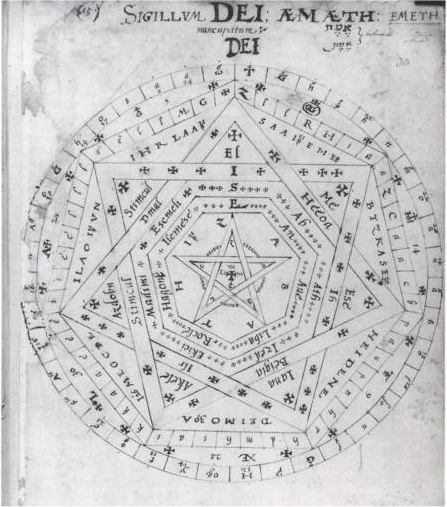
Diagram of Sigillum Dei Aemeth, John Dee, 1582

En este cruce de refentes, lo interesante que se resaltaba en la charla eran los parelismos que hay entre ocultismo y ciencia, entre tecnología y muerte, entre cartografías e invasión.

También podríamos señalar cómo coincide en las mismas figuras científico-políticas el desarrollo de las herramientas de navegación y la idea de Imperio, cómo en su propia genealogía ya está impresa -lo veíamos más arriba en la bio de John Dee- la idea de colonialismo con todo lo que ello conlleva, cómo la cartografía es una organización del mundo, incluso siendo ficcional como bien explica Estrella de Diego en Contra el mapa.

Perderse puede ser un intento a escapar a la lógica del mapa como haría Yoko Ono en la pieza en texto en la primavera de 1964:

Map Piece
Dibuja un mapa para perderte


25/5/10

Berlin mental maps 20 years after the Fall of the Wall, Urszula Wozniak, 2010

Berlin mental maps 20 years after the Fall of the Wall

Mi querida compañera de piso Urszula Wozniak por fín ha subido a Scrib el artículo que publicó dentro el libro You are here, editado por el gran John Holten, del que hemos tenido el honor en Altes Finanzamt de contar con él en alguna de las noches de lectura, y de Line Madsen Simenstad.

Varias representaciones de la península en Ptolomeo


Mapa España. 1561.Hispania según Geographia de Ptolomeo (Tabvla Evropae II) 1561. Edición de Venecia. Girolamo Ruscelli, basado en la edición de 1548 de Giacomo Gastaldi.

Mapa España. XVII. Mercator.


Mapa de España. Siglo XVII. Joannem Jansonium


España. XIX.
Mapa de España. Tomás López. 1802. Mapa general de España dedicado el Príncipe de Asturias


Ptolomeo.es es una página comercial de venta de mapas, globos, cartas marinas y grabados que encuentro particularmente interesante porque da para comparar la representación cartográfica y de vistas de mismos sitios durante varios periodos, como es el caso de la representación de la peníncula en las imágenes de arriba en el que podemos cómo los procesos geológicos han tenido lugar, de forma inconsciente, en la imaginación de los cartógrafos.

Aquí dos ejemplos más de joyitas que podemos encontrar por su archivo:


Mapa Biscaiae Pars. XVI.
Mapa calcográfico en blanco y negro. Carta marina en perfecto estado que cubre la costa desde Laredo hasta Llanes. Texto en latín y holandés. La costa se ve en perspectiva desde mar adentro. Hay barcos, monstruos marinos, escalas y gran cartela con decoración vegetal. Texto posterior en francés. Perteneciente al atlas "Espejo del mar" publicado por el piloto y cartógrafo Waghenaer. Detalla las profunidades de la bahía de Laredo y Santander. Es la primera carta marina impresa de las costas del norte de España. Muy rara.


Principios del XIX. Maison Delamarche. Francia. Esfera Armillar.

Project Chariot plans


Plans to use five thermonuclear explosions to create an artificial harbor at Cape Thompson, Alaska, for Project Chariot in 1958. It was eventually cancelled amid controversy and protest. The outer-outline represents the "full scale" plan, which would require detonations totalling 2.4 megatons. The inner outline is a scaled down version, of 460 kilotons. It would be eventually scaled down to 280 kilotons.

From Wikipedia.

Topic Map: How Sciencetific Paradigms relate


A MAP OF SCIENCE created by Sandian Kevin Boyack with collaborators Richard Klavans and Brad Paley, resembles a filamentous microorganism you might see under a microscope.

The map represents 800,000 scientific papers (shown as white dots) and shows relationships between them and different scientific disciplines. The "filaments" are common words unique to each "scientific paradigm" — the 776 red circular nodes or clusters of papers. Each node contains papers that are commonly cited together. Larger nodes have more papers. Nodes are connected with lines of various lengths and thicknesses, denoting the strength of the citation linkages between the nodes. Layout of the nodes was done using Sandia's VxOrd clustering algorithm. Chemistry papers are found in the right-hand peninsula while astrophysics is located at the top. Medicine covers the large region at the lower left.

A four-foot-by-four-foot version of the map is on display at the New York Hall of Science until Feb. 25 as part of the "Places & Spaces: Mapping Science" exhibition. This image also appeared in the Gallery section of the 2006 year-end issue of Nature (vol. 444, p. 985).

Boyack, a founding member of the advisory board of Places & Spaces, produced the map in collaboration with Klavans, SciTech Strategies of Berwyn, Pa., and Paley, graphic artist and director of Information Esthetics, New York, N.Y., using 2003 data from Thomson ISI. It was enabled by work performed under a Laboratory Directed Research and Development project whose purpose was to generate large-scale maps of science for planning and evaluation purposes.

For more information on interpreting the map see Paley’s website http://didi.com/brad/mapOfScience. For details on the exhibition see http://www.scimaps.org.

28/3/10

OPEN SABADELL MAPS

L'àmbit de les intervencions artístiques a l'espai públic ha experimentat als darrers anys un important creixement, fruit d'una genealogia que beu de la tradició de l'art públic, la performance, l'activisme social, el tactical media i els nous processos de participació ciutadana.

Dins d'aquest ambit, les arts locatives -l'aplicació dels sistemes de geolocalització contemporanis com la telefonia mòvils, el GPS o GoogleMaps a les pràctiques artístiques- representen un dels resorts més potents de dinamització de la creació contemporània i una invitació a rellegir i participar en l'espai públic.

Open Sabadell Maps operarà de manera específica en el context sabadellenc i amb els sabadellencs, mitjançant un anàlisi meta-referencial de les evolucions del seu context social i urbanístic aprofitant les potencialitats dels nous sistemes de mapejat de codi obert.

7, 11 i 14 de maig del 2010: sessions teòriques *
18, 21 i 25 de maig del 2010: sessions pràctiques

Direcció: SiteSize
Professor convidat: Ivan Sanchez

Amb la col·laboració de:
ESDI
YProductions

Desde l´estruch

23/3/10

New Papers


Regina de Miguel
Nouveau Science_Vague Fiction, 2010


Javier Arce
Sin Título, 2010

New papers surge en diciembre de 2008 como una nueva forma de entender la publicación impresa. Con un planteamiento puramente visual se define más como una exposición, que como un periódico, aunque su formato sea el de este último. El punto de partida es muy sencillo: Un tema, 11 artistas, 11 carteles. Una publicación trimestral, cuyo contenido es la propuesta de 11 artistas de diferentes disciplinas (diseño, fotografía, ilustración...) donde puedan reflexionar libremente y plantear sus ideas entorno a un tema concreto, en formato cartel.

Todos los participantes tienen completa libertad a la hora de crear.

El objetivo, colocar parte de estos carteles en espacios concretos dentro de la ciudad. El resto de la tirada se repartirán gratuitamente en los puntos oficiales de distribución.

New papers es un proyecto de Javier Andrés y Ricardo Juárez.

Al completo en New papers.

Paisaje transversal


Paisaje Transversal es una Asociación Universitaria con sede en la ETSAM (Escuela Técnica Superior de Arquitectura de Madrid) conformada por colaboradores provenientes de diversos ámbitos: estudiantes, arquitectos, urbanistas, biólogos, artistas, geógrafos, sociólogos e historiadores del arte. Nace como extensión del blog con el mismo nombre (paisajetransversal.blogspot.com) con el propósito de intensificar las actividades que éste viene desarrollando desde su fundación en julio de 2007.

Esta “plataforma para la negociación urbana y la acción territorial” nació con la firme intención de establecer un lugar de encuentro entre personas con inquietudes e intereses en el paisaje, el urbanismo así como en cualquier acción relacionada con el territorio. En este sentido, propone el lugar ideal para el desarrollo de una conciencia transdisciplinar que avalase una reformulación de la práctica territorial y su enseñanza. De este modo, esta plataforma digital incita a los usuarios a la participación en la iniciativa a través de la publicación de todo tipo de materiales (artículos, vídeos, poemas…) inscritos en el marco teórico prefijado.

La constitución de Paisaje Transversal está refrendada por un fuerte carácter de renovación e innovación. Queremos poder tomar un papel destacado en la vida académica y apoyar la labor docente introduciendo complementos pedagógicos que puedan enriquecer la formación de los estudiantes. Bajo esta perspectiva se plantean una serie de objetivos seminales.

Para conocer más sobre Paisaje Transversal, anda hasta su blog.

Mapa de Asociaciones y Colectivos de investigación, producción y difusión del arte contemporáneo de Otroespacio


Ver Mapa de Asociaciones y Colectivos de investigación, producción y difusión del arte contemporáneo en un mapa más grande

Gran trabajo de cartografía del señor Jujo de Otroespacio.

8/2/10

Lia Perjovschi; Mental maps


Mind Map Subject (detail), 1999-2006
100 x 137 cm


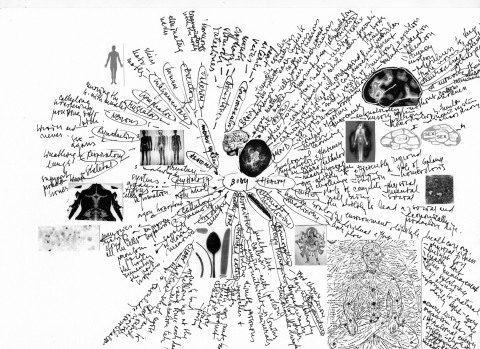
Lia Perjovschi, Body Mind Map , 2006
digital print enlargement of variable size after original A4 ink drawing/collage Detail of Knowledge Museum, 1999

The freedom of critical thinking is crucial to Lia’s practice, which involves recovering, collecting and disseminating information. She is – in sum – a personal alternative to the institutionalisation of knowledge and carries her own portable, emancipated system of knowledge with her. Her history of the world from pre-history to today appears in note form as a reading of ideas in hand-drawn diagrams that touch on history, art theory, politics and language – what she calls a Mind Map (Diagram).

Info desde aquí. Es realmente complicado encontrar información de esta artista sin que mencionen a su pareja, Dan Perjovschi.


For over ten years now, the artist has been interested in the visual representation of the accumulation of information/knowledge. The belief in ideals, in the realization of dreams, as well as in the function of art in increasing knowledge, is one of the most important characteristics of Perjovschi’s artistic practice. With the Plan for a Museum of Knowledge, she proposes an imaginary museum, which is based on the metaphors of the Body, the Earth and the Universe. The museum is complemented with the subunits of Culture, Art and Science. The installation, which comprises drawings, objects, charts, photos and colour prints, is an objectification of the mass of information the artist has acquired through reading, travelling and creative work.

Algo más sobre ella que llega desde aquí.

La primera pista, desde esta expo con muy buena pinta que inaugura en breve en Montehermoso .

Unofficial Deposited Records; Elsebeth Jørgensen and Pia Rönicke, 2005


Elsebeth Jørgensen and Pia Rönicke: Unofficial Deposited Records (2005–> )
A commission for the hoardings on Tate Modern’s south landscape.
From 25 November 2005 —>

Tate Modern - Press release: 21 November 2005

On 25 November Tate and EDF Energy will unveil an art project specially commissioned from Danish artists Elsebeth Jørgensen and Pia Rönicke for the hoardings on the south perimeter of Tate Modern. The artists have created a gigantic bulletin board, or montage, from a fascinating array of material including old photographs, newspaper clippings, historical documents and maps which all relate to the Southwark area. The material has been selected from their research in the archives of the Southwark Local History Library on nearby Borough High Street. Jørgensen and Rönicke have also invited members of Tate Modern’s Community Film Club to contribute material which will add to the project’s visual narrative about Southwark such as photographs, texts and reminiscences.

The project, Unofficial Deposited Records, questions how we represent history, demonstrating how fact and fiction can combine to provide fertile ground for imaginative exploration.

Elsebeth Jørgensen and Pia Rönicke’s interest in archives focuses on how facts and narrative interweave with official and unofficial records. Like museums, archives contain cultural data and can be viewed as deposits for memories, where meanings are constantly shifting in relation to the context in which material is seen. The artists’ montage suggests narratives by triggering the viewer’s imagination and highlighting the tenuous link between fact and fiction in our reading of history.


Más en la página de Elsebeth Jørgensen, Mapping memory.

Proyecto Redada; Yproducciones.


Sobre Redada

El Proyecto Redada es una iniciativa de YProductions para CAMON Alicante que se desarrolla en tres fases. Primero empezamos entrevistando a los principales agentes culturales de la zona de Alicante, San Juan de Alicante, San Vicente del Raspeig y Elche para entender mejor cómo se estructura la producción cultural de la zona. Los resúmenes de estas entrevistas y nuestras impresiones serán posteriormente subidas a este sitio web.

Segundo, a través de la información proporcionada por las diferentes personas y colectivos con los que nos entrevistamos realizaremos el mapa Conexión_Camon en el que se podrán ver las relaciones y lugares que ocupan las diferentes iniciativas culturales del contexto alicantino. Por último terminaremos haciendo un taller en el que participarán tanto los agentes y colectivos con los que nos hemos entrevistado como personas interesadas en la cultura durante el que interpretaremos los mapas y la información que hemos podido recoger durante todo el proceso.
De esta forma generamos una investigación colectiva en torno a la producción cultural de la zona, viendo las relaciones que se establecen entre las entidades públicas y privadas, el tipo de tramas que sustentan la cultura y las dinámicas de trabajo que emergen en esta realidad.

Desde YP hemos trabajado la noción de innovación emergente como forma de describir ciertos procesos de innovación que se producen en la cultura. Para que ésta se produzca es necesario permitir que se generen procesos de autoorganización, se han de fomentar modelos de trabajo y colaboración bottom-up, las políticas culturales y administraciones han de ser sensibles a los procesos y dinámicas culturales que acontecen de forma espontánea en la ciudad. Si pensamos que el espacio cultural puede ser un espacio de producción de conocimiento es necesario comprender las dinámicas de producción y distribución que sustentan la cultura, buscando las maneras en las que estos conocimientos puedan insertarse en el tejido social y cultural de las ciudades. Para comprender como funcionan todos estos procesos nos hemos lanzado a las calles…

¡Vamos pues con la redada!


Para consultar el proyecto completo, el archivo de trabajadores culturales y etc, échale un ojo en la página de Redada de Yproducciones.

2/2/10

Experimental Geography: Radical Approaches to Landscape, Cartography, and Urbanism; Nato Thompson, 2008.


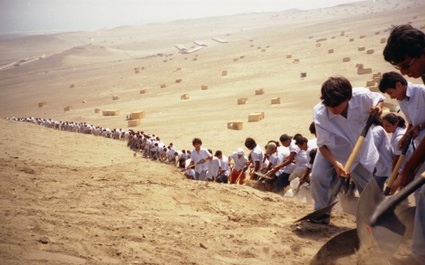
Francis Alÿs in collaboration with Cuauhtemoc Medina and Rafael Ortega, When Faith Moves Mountains, 2000-2002 (check out the video)


Artist and geographer Trevor Paglen coined the term 'experimental geography' back in 2002 and given his experience in the field who better than him could define this emerging genre?

Experimental geography means practices that take on the production of space in a self-reflexive way, practices that recognize that cultural production and the production of space cannot be separated from each another, and that cultural and intellectual production is a spatial practice. Moreover, experimental geography means not only seeing the production of space as an ontological condition, but actively experimenting with the production of space as an integral part of one's own practice. (More in his essay Experimental Geography: From Cultural Production to the Production of Space.)

Más sobre el proyecto en la reseña de wemakemoneynotart y en la web del mismo.